The Broken Windows of Workplace Safety: Why Small Lapses Lead to Major Incidents

October 27, 2025

In every high-risk industry, many safety leaders can recall the moment a small, overlooked detail turned into something catastrophic.

- A missing guardrail.
- A skipped inspection.
- A forgotten safety meeting.


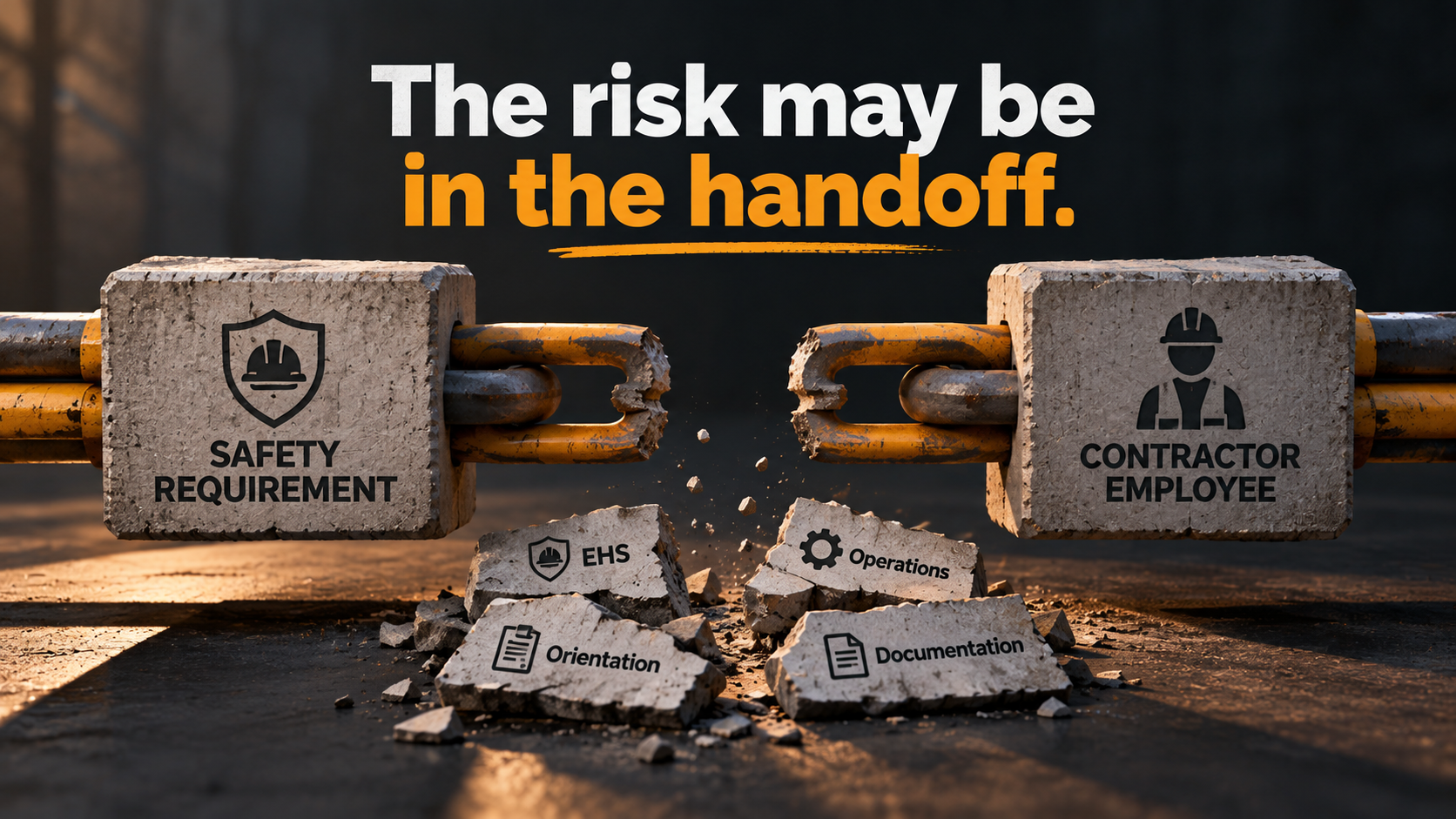
Each seemed minor at the time. But when combined, they became the weak link that broke the chain of prevention.


This is the essence of the Broken Windows Theory in workplace safety - the idea that if small issues go unchecked, they create an environment where major incidents are more likely to occur. And for today’s EHS, Risk, and Operations leaders, this principle is more relevant than ever.


The Real Cost of “Small Safety Lapses”


Workplace safety isn’t usually undone by a single event. It’s the slow erosion of standards - the paperwork not filed, the worn PPE not replaced, or the toolbox talk that gets postponed “just this once.”


These small safety lapses may seem insignificant, but they quietly signal that corners can be cut. Over time, that mindset takes root in a company’s culture.


When supervisors overlook unsafe behavior, or when contractors are allowed onsite without complete prequalification, a silent message spreads: “We talk about safety, but we don’t always mean it.”


This erosion of accountability impacts:

  • Safety Managers, who must explain preventable incidents to executives.
  • Risk Officers, who see EMRS, and consequently insurance premiums, rise.
  • Operations Leaders, who face project delays, citations, or worse - injuries that change lives.


According to OSHA, more than 5,000 workers die each year in the U.S. due to workplace incidents. A majority of these stems from human error and procedural gaps - not the absence of safety programs, but the failure to consistently follow or enforce them.


Human Error in Safety: A Symptom, Not the Cause


When an accident happens, investigations often point to human error. But experienced safety professionals know that “error” is rarely random; it’s usually the result of deeper systemic issues - a chain of small failures.

  • Latent conditions: poor supervision, inadequate training, inadequate maintenance, vague procedures, production pressure, or fatigue.
  • Active failures: a momentary lapse - someone skips a step, misjudges a distance, disables a guard, or takes a “shortcut.”
  • Event: the physical mechanism (fall, collision, electrocution).


Without a strong framework for safety management and risk management, even the most seasoned teams can miss the latent conditions.


Broken Windows in Contractor Safety


Nowhere is this more visible than in contractor management. Many organizations invest heavily in safety programs for their employees, yet overlook the same standards for their extended workforce: their contractors.

That’s where the cracks form.

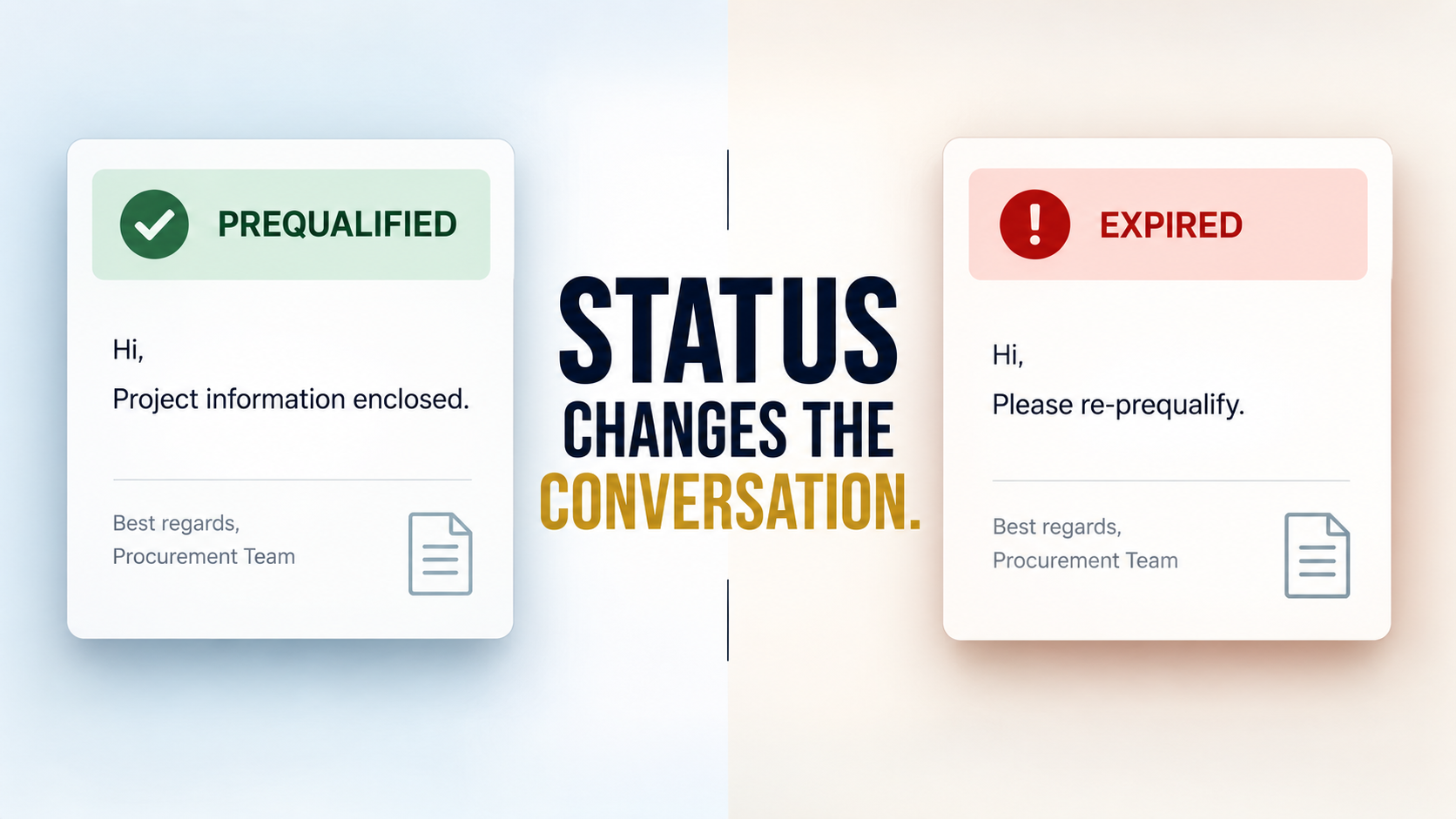
- A single expired COI.
- A training record that was “pending.”
- A contractor’s outdated safety manual.


These are the broken windows of contractor compliance. Left unaddressed, they undermine not just safety compliance, but the trust between your organization, your workforce, and your partners.


Building a Resilient Workplace Safety Culture


The foundation of any strong workplace safety culture is accountability - the expectation that every worker, at every level, takes ownership of safety.


To repair broken windows before they shatter, organizations must:


1. Implement proactive verification.

Move beyond self-reported safety claims. Require documentation for every insurance policy, OSHA log, and training record.


2. Standardize contractor prequalification.

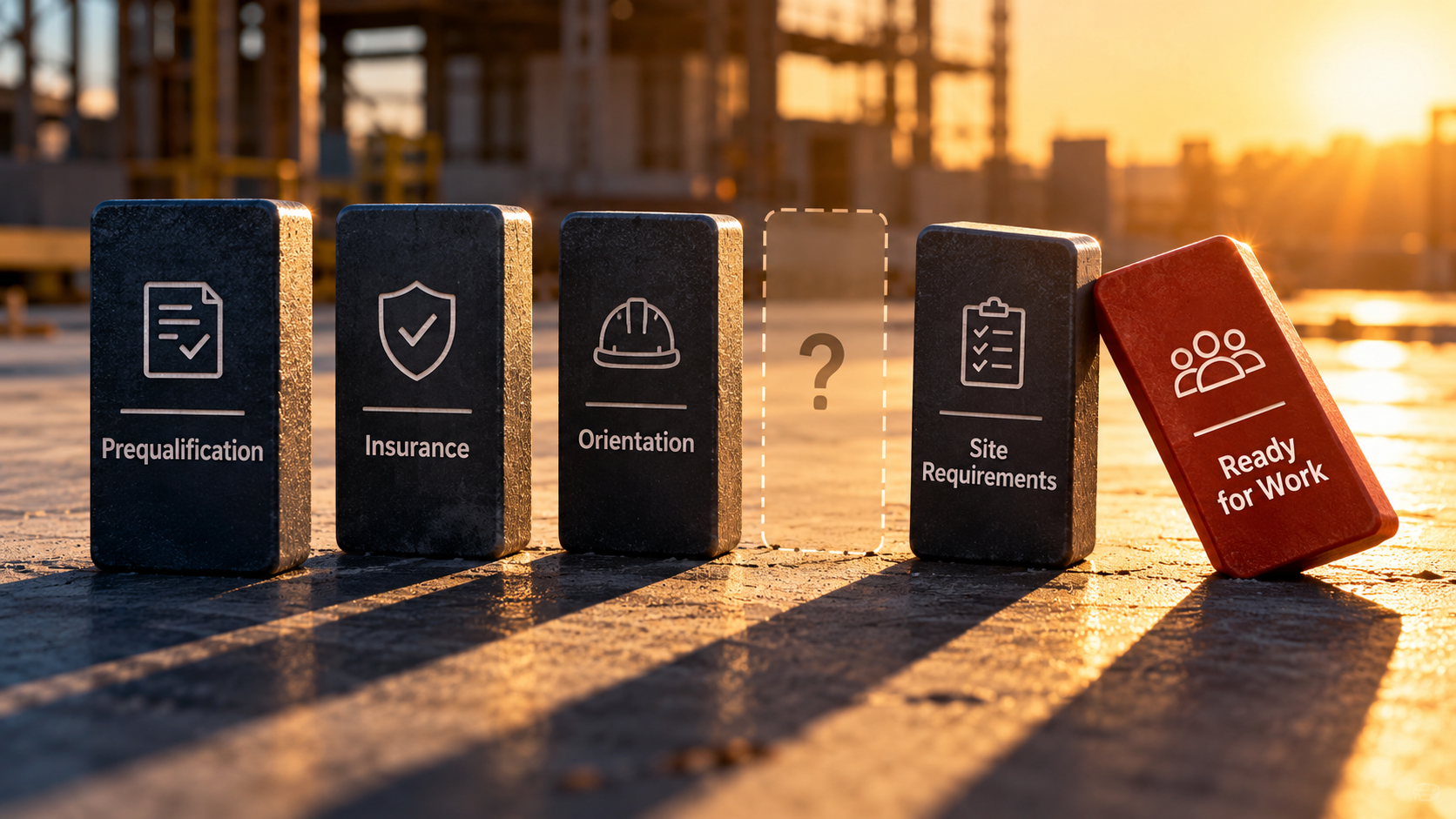
Ensure every contractor meets your organization’s safety, financial, and regulatory requirements before they arrive onsite.


3. Audit for implementation, not intention.

A written fall protection plan means little if it’s not practiced. Remote or onsite audits confirm not just if safety programs exist, but if they're actively implemented.


4. Use data to drive continuous improvement.

Track trends in safety observations, expired COIs, and training gaps. Early detection prevents escalation.


5. Lead with safety visibly.

Safety leadership starts at the top. When executives prioritize safety meetings and enforce stop-work authority, accountability becomes cultural.


How Technology Strengthens Safety Leadership


In today’s fast-moving industrial environment, manual tracking of contractor compliance simply can’t keep up. Spreadsheets can’t send reminders. Paper files can’t flag expired insurance. And email chains don’t verify authenticity.


That’s why more organizations are turning to digital safety management platforms like FIRST,  VERIFY: Tools that centralize contractor data, automate the verification process, and create the transparency needed for compliance confidence.


  • Contractor prequalification ensures only compliant contractors are approved.
  • Integrated audit programs (remote and onsite) verify that safety programs aren’t just written - they’re implemented.
  • Real-time reporting helps Safety Managers and Risk Officers spot gaps before they turn into liabilities.


As one client put it:

FIRST, VERIFY has helped us create a sustainably safe environment for our employees and every contractor who steps onsite.”


That’s the measurable difference between checking boxes and building a culture.


Preventing Workplace Accidents Starts with the Small Things


Every major incident begins as a small oversight. The missing documentation. The unchecked hazard. The unverified contractor.


Preventing workplace accidents isn’t just about compliance - it’s about vigilance. It’s about creating systems that make small lapses impossible to ignore.


When you close those windows early, you don’t just reduce risk, you strengthen the entire foundation of your organization’s environmental, health and safety culture.


Take Action: Strengthen Your Safety Culture with FIRST, VERIFY


Your safety culture is only as strong as its weakest link, and in a multi-contractor environment, that link is often the process you can’t see.


FIRST, VERIFY helps EHS, Risk, and Operations leaders eliminate those blind spots.

  • Streamline contractor prequalification
  • Verify certificates of insurance (COIs) and safety programs
  • Audit compliance remotely or onsite
  • Build a transparent, proactive safety ecosystem


Don’t wait for a small lapse to become a major incident.


Request a demo and see how FIRST,  VERIFY transforms contractor risk management into your strongest line of defense.


You might also like
By Erica Montefusco March 13, 2026
Erica Montefusco , Senior VP, Risk & Compliance at PROtect tells us why composure is one of the most underestimated risk controls There is a version of leadership that looks strong: Decisive. Authoritative. Confident. Unshaken. And then there is the version of leadership that is actually strong: Calm. Measured. Intentional. Grounded under pressure. The difference only reveals itself in difficult moments. Curiosity enables leaders to identify emerging risks. Resilience determines how they respond when those risks materialize. Pressure Is the Real Leadership Test Industrial and operational environments are inherently dynamic. In industrial environments, pressure is inevitable. Production deadlines tighten. Weather shifts unexpectedly. Incidents occur. Regulators call. Clients demand answers. In those moments, policies matter. Procedures matter. Training matters. Leadership behavior becomes as consequential as policy design. But something else matters just as much: Tone. When pressure rises, people do not default to the manual. They calibrate to leadership. If the leader escalates, the room escalates. If the leader steadies, the room steadies. The tone established by senior leaders influences how information is shared, how accountability is approached, and how effectively teams navigate uncertainty. Escalation can either compound disruption or contain it. Composure is not personality. It is a decision. And it is one of the most powerful risk controls we have. Sustained resilience preserves the conditions necessary for effective risk management. It protects decision quality, maintains organizational trust, and ensures that even under scrutiny, the organization responds with stability rather than volatility. In high-consequence industries, that stability is not simply a leadership trait — it is a strategic asset. Curiosity helps us identify risk. Resilience shapes how we respond when that risk becomes real. Anyone who has worked in industrial or operational environments knows that pressure is not hypothetical. Deadlines compress. Expectations escalate. Incidents require immediate clarity. External scrutiny can intensify without warning. In those moments, policies and procedures matter — but so does something less tangible. Leadership tone matters. Over time, I have come to understand resilience not as toughness, but as intentional calm. It is the ability to pause when acceleration feels easier. It is choosing clarity over reaction. It is protecting the quality of a decision, even when timelines feel compressed. Resilience Is Not Loud Resilience is often misunderstood as toughness. In my experience, resilience is quieter than that. It is the ability to absorb impact without amplifying it. To process urgency without transmitting panic. To hold responsibility without deflecting it. Resilience does not mean indifference. In fact, it often requires absorbing more than you show. It means holding responsibility without transmitting panic. It means reinforcing accountability without creating fear. There have been moments in my career when decisions had weight. When incidents required difficult conversations. When leadership alignment was not immediate. When the right path was clear but not easy. Resilience is not the absence of doubt. It is the ability to move forward thoughtfully despite it. Resilience in risk leadership is therefore not emotional detachment, nor is it rigid confidence. It is disciplined composure. It allows leaders to slow decision-making when urgency threatens clarity, to distinguish between material risk and momentary noise, and to reinforce accountability without creating defensiveness or fear. The Invisible Weight of Responsibility Risk leadership carries a particular kind of weight. When you approve a program, sign off on a system, or certify readiness — you are implicitly saying: “I believe this protects our people.” That should never feel casual. Under pressure, the temptation is to accelerate. To compress review cycles. To assume stability. But experience teaches something different; the cost of rushing risk decisions compounds quietly. Strong leadership sometimes means slowing down when everyone else wants to speed up. That is not obstruction. That is stewardship. Crisis Reveals Culture Difficult moments reveal culture more clearly than routine ones. When pressure rises, do people continue to speak openly? Do teams stay focused on understanding what happened, or do they shift toward protecting perception? The answers to those questions tell you whether resilience is embedded in the organization — or merely assumed. You can learn more about an organization in a single difficult week than in a year of routine operations. When something goes wrong, watch: Do people look for blame? Or do they look for understanding? Do leaders protect reputation first? Or protect people first? Do teams communicate openly? Or retreat into defensiveness? Resilience is not built during crisis. It is revealed. The culture you shape on ordinary days determines how your organization behaves under extraordinary ones. Organizations reveal their cultural maturity during periods of stress. In resilient environments, reporting remains transparent, analysis remains objective, and improvement efforts focus on systems rather than blame. In fragile environments, pressure suppresses reporting and shifts attention toward reputational protection rather than operational correction. In my experience, resilience is built long before crisis arrives. It develops through experience, through reflection, and through learning when to slow down rather than speed up. It is strengthened every time a leader chooses steadiness over escalation. In high-risk environments, that steadiness is not just a leadership trait. It is a protective force. It safeguards decision quality, preserves trust, and creates the conditions where honest conversations can continue — even under pressure. And often, that makes all the difference. Personal Evolution Under Pressure Early in my career, I believed strength meant always having the answer. Now I understand that strength often means holding space long enough to ask better questions. “What are we missing?” “What assumptions are we making?” “What would this look like if it went wrong?” Pressure can narrow perspective. Resilient leadership expands it. Over time, I have learned that steadiness is not automatic. It is built through experience. Through adversity. Through moments that test your confidence. Resilience is not inherited. It is earned. The Discipline of Staying Calm Remaining calm under pressure does not mean you are unaffected. It means you are intentional. Intentional about your words. Intentional about your pace. Intentional about your influence. In high-risk environments, emotional regulation is not a soft skill. It is operational infrastructure. It protects decision quality. It protects team cohesion. It protects escalation pathways. Calm leadership does not remove risk. It reduces secondary damage. Why This Matters More Now We are operating in an era of accelerated visibility. Data moves faster. Public scrutiny is sharper. Regulatory expectations evolve quickly. Pressure will not decrease. The leaders who endure will not be the loudest. They will be the most grounded. Resilience in leadership is not about dominance. It is about stability. And stability, in high-risk environments, is strength. Closing Reflection There is a difference between reacting and responding. Reaction is emotional. Response is intentional. Under pressure, that distinction determines outcome. Resilience is not something we list on a résumé. It is something people feel when they stand in a room with you during a difficult moment. And in risk leadership, that feeling can make all the difference.
Multi-Site Contractor Verification for Safety Programs
March 10, 2026
Learn how consistent contractor verification across locations strengthens multi-site safety programs and improves contractor compliance oversight.
By Erica Montefusco March 4, 2026
EDITOR'S NOTE: Our friend Erica Montefusco , Senior VP, Risk & Compliance at PROtect, wrote the following post on LinkedIn. We liked it so much we asked if we could republish it as a guest blog. This is the first of four com-panion pieces on resilience and leadership, which will appear in future guest blogs. _______________ There is a misconception that industrial risk leadership is rigid. Regulations. Standards. Checklists. Audits. Metrics. On the surface, it can look procedural. But the longer I’ve worked in risk, safety, and compliance, the more I’ve realized something unexpected: This career is not about rigidity. It’s about exploration. Curiosity Is a Risk Control Before I worked in industrial environments, I was fascinated by anthropology, archaeology, and scientific dis-covery. Why civilizations rise. Why they collapse. How systems evolve. How small environmental or cultural shifts compound over time. That lens never left me. In industrial risk, the same principles apply. Organizations don’t experience catastrophic failure without signals. Drift occurs gradually. Norms shift quietly. Pressure normalizes shortcuts. If you’re not curious, you miss it. Curiosity is not abstract in this profession. It’s protective. Asking: Why is this procedure written this way? Why are near-miss reports declining? Why does this site feel different than others? Why did supervision behavior change under schedule pressure? Risk leadership requires scientific thinking - observation, hypothesis, pattern recognition. It is less about enforcement. More about investigation. Cultural Understanding Shapes Safety Culture Traveling the world, experiencing different countries, belief systems, and social norms, it reshaped how I view organizational culture. Every culture, whether national or corporate, has invisible rules. What is spoken openly. What is avoided. Who challenges authority. Who doesn’t. Safety culture operates the same way. You cannot implement risk controls without understanding cultural dynamics. If speaking up is culturally discouraged, Stop Work Authority will fail. If production pressure is celebrated as heroism, incidents will rise. If environmental stewardship is treated as compliance instead of responsibility, corners will eventually be cut. Leadership requires cultural literacy. And cultural literacy begins with humility. Exploration Builds Resilience Exploration, whether physical or intellectual, builds resilience. When you’ve navigated unfamiliar terrain, when you’ve faced environments outside your comfort zone, when you’ve experienced adversity and uncertainty… you learn something essential: Calm is a choice. In industrial risk leadership, calm is not optional. Emergencies happen. Incidents occur. Regulators ask hard questions. Executives look to you for clarity. Your tone becomes the baseline for everyone else. Resilience is not bravado. It’s steadiness under pressure. That steadiness is built long before crisis arrives. It is built through challenge. Scientific Curiosity and Regulatory Discipline Risk work is often viewed as regulatory. But at its core, it is scientific. Observe. Measure. Analyze. Adjust. Environmental compliance demands precision. Safety programs demand behavioral understanding. Risk mitigation demands systems thinking. The most effective leaders in this space are not just rule-followers. They are investigators. They want to understand: What is really happening? What patterns are emerging? What assumptions are we making? Where is drift occurring? Exploration and science share a common foundation: Intellectual honesty. If something isn’t working, you change it. If evidence contradicts belief, you adapt. That mindset has shaped how I lead. The Connection Between Stewardship and Leadership The longer I work in this field, the more I see risk leadership as stewardship. We are entrusted with: People’s safety. Community trust. Environmental integrity. Corporate reputation. Financial stability. That is not a small responsibility. Travel has taught me how interconnected systems are. Environmental work reinforces that daily. Air doesn’t stop at property lines. Water doesn’t respect ownership boundaries. Reputation doesn’t isolate itself to a single event. Leadership requires long-term thinking. Exploration teaches you to look beyond the immediate horizon. Why This Matters Now We are entering a period of increased transparency. AI-driven analytics. Real-time environmental monitoring. Data visibility at unprecedented levels. The future risk leader must be more than compliant. They must be: Curious. Culturally aware. Scientifically grounded. Emotionally steady. Ethically anchored. Industrial leadership and exploration are not opposites. They are parallel disciplines. Both require courage. Both require humility. Both require adaptability. Both require respect for forces larger than yourself. And both demand resilience. Closing Reflection If there is one thing my professional career and personal philosophy share, it is this: Never accept the surface. Look deeper. Ask harder questions. Challenge assumptions. Stay steady under pressure. Protect what matters. Risk leadership, like exploration, is not about control. It is about understanding. And understanding is what ultimately keeps people safe.

Book a Service Today