The Physics of Accidents: Why Small Errors Create Catastrophic Outcomes
A contractor skips a step.
Nothing happens. So the work continues.
Until something does happen and it’s serious.
This is how most incidents unfold. Not suddenly. Not dramatically. But gradually, through small gaps that go unnoticed until they combine into something larger.
For Safety Directors, Risk leaders, and Operations teams, this is where understanding workplace accidents physics becomes critical. Because incidents don’t escalate randomly - they follow predictable rules driven by energy, motion, and control.
Accidents Don’t Start Big - They Build
Every worksite operates with energy. Equipment moves. Loads are lifted. systems are pressurized. Electricity flows.
These forces are not the problem. They are necessary. The problem begins when control over those forces weakens.
A missing document delays verification. A contractor arrives without fully documented training. A certificate of insurance is outdated, but not caught in time.
Individually, these seem minor. Operational noise. But they remove safeguards. And once those safeguards are gone, energy behaves exactly as physics dictates without restraint.
This is the essence of the physics of accidents: energy is always present, and when controls fail, outcomes escalate.
OSHA standards are built around this principle. Requirements such as lockout/tagout procedures exist specifically to control hazardous energy before it causes harm
Why Small Errors Lead to Catastrophic Outcomes
Most incidents don’t begin with a major failure. They begin with something administrative: A missing training record. Incomplete safety documentation. Unverified contractor information.
These gaps don’t create immediate consequences. That’s why they’re easy to ignore. But over time, they compound.
Industry data consistently shows that inadequate training, poor documentation, and weak hazard commu-nication are among the most common contributors to workplace incidents
When those gaps align with uncontrolled energy, the result is no longer small. This is how small errors create catastrophic outcomes.
The Misconception About Human Error
After an incident, the explanation often centers on one idea: human error. But people make mistakes every day without consequence. What determines whether an error leads to an incident is the system around it.
If contractor requirements are clear, documentation is verified, and information is accessible, mistakes are caught early.
If not, those same mistakes interact with uncontrolled energy and that’s when escalation happens. This is why accident causation physics is not just about behavior. It’s about whether systems are strong enough to contain inevitable human error.
Where Risk Quietly Enters the System
In most organizations, risk doesn’t come from lack of effort. It comes from inconsistency: Contractor data is often managed across multiple systems. Documentation is stored in different places. Insurance tracking becomes reactive instead of structured. Over time, this creates variation.
One contractor is thoroughly reviewed. Another is rushed through onboarding. One COI is checked carefully. Another is accepted without full verification. These inconsistencies are where exposure builds.
For example, incomplete or incorrect insurance documentation such as expired policies or missing endorse-ments can lead to significant financial and legal consequences if an incident occurs. The issue isn’t policy. It’s execution.
Why Systems not Effort Prevent Incidents
Most safety teams are not lacking commitment. They’re managing complexity. Tracking contractor compli-ance manually takes time. Verifying documents takes time. Following up on missing information takes time. And when time is limited, decisions are made with partial visibility.
That’s where risk compounds. A structured approach changes this.
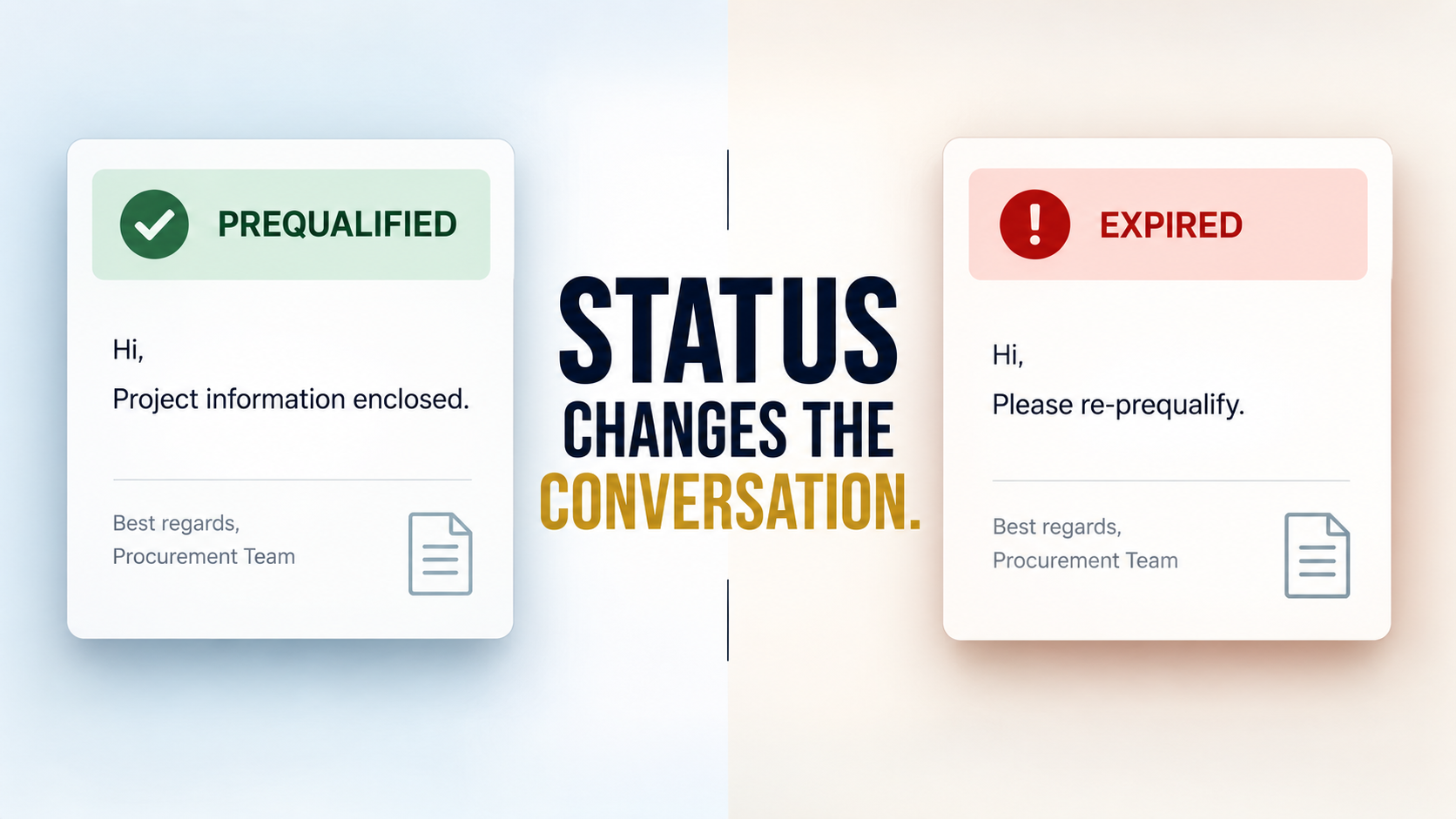
When contractor prequalification follows defined criteria, when safety documentation is centralized, and when insurance is reviewed consistently, variability is reduced. Instead of chasing information, teams can rely on it.
A centralized system allows organizations to gather, organize, and maintain contractor data in one place, improving visibility and supporting consistent compliance across teams and locations. And consistency is what keeps small issues from becoming serious incidents.
The FIRST, VERIFY Perspective
At FIRST, VERIFY, the focus is on bringing structure to contractor management processes that are often fragmented. Through a rules-based prequalification process, organizations can evaluate contractors against consistent requirements before work begins.
Through centralized compliance data, safety documentation, certificates of insurance, and business details are accessible in one place.
Through structured COI management, organizations can identify gaps in coverage and address them before they impact operations.
The result is not more data, but better clarity. And when teams have clear, consistent information, they are better equipped to make decisions that reduce risk.
What This Means for Your Safety Strategy
When incidents are viewed through the lens of workplace accidents physics, a clear pattern emerges. Risk builds when small gaps go unaddressed.
Incomplete documentation. Inconsistent verification. Limited visibility. Over time, these gaps weaken the controls that keep energy contained. And when those controls fail, outcomes escalate beyond the scale of the original mistake.
For organizations managing contractors across multiple sites, consistency is not just an operational improvement - it is a critical part of risk management.
Moving from Reaction to Control
Many safety programs are designed to respond to incidents. The more effective ones are designed to prevent escalation before work begins. That shift happens when contractor information is structured, verified, and con-sistently maintained. It allows teams to make decisions based on complete, accurate data - not assumptions.
At FIRST, VERIFY, the goal is to support that shift.
By standardizing contractor prequalification, centralizing compliance data, and improving visibility into COIs and training documentation, organizations can reduce variability across their contractor base. And when variability is reduced, so is risk.
Because in environments where energy is always present, control - not chance - determines the outcome.
Contact FIRST, VERIFY to learn more.
You might also like