Why Humans Underestimate Risk: The Psychology Behind Workplace Accidents
When workplace accidents occur, investigations often focus on equipment failures, procedural violations, or environmental hazards. Those factors certainly matter. But beneath many incidents lies a less visible driver: the way human beings perceive and judge risk.
Decades of research in psychology and safety science show that people are not naturally good at evaluating danger. The human brain relies on mental shortcuts known as cognitive biases that help us make quick decisions in complex environments. These shortcuts are useful in everyday life, but in industrial settings they can quietly distort risk perception.
One of the most influential concepts explaining this phenomenon is normalization of deviance, a term introduced by sociologist Diane Vaughan in her landmark study The Challenger Launch Decision: Risky Technology, Culture, and Deviance at NASA (1996). Vaughan examined how NASA engineers and managers gradually came to accept warning signs in the space shuttle’s O-ring seals. Each time a launch occurred without catastrophic failure, the anomaly appeared less alarming. Over time, the abnormal condition became treated as acceptable. What began as a warning signal slowly transformed into routine operating practice.
This process where deviations from safety rules gradually become normalized because nothing bad happens immediately has since been observed across many industries, including aviation, healthcare, and chemical processing. It illustrates a critical truth about safety: risk does not always reveal itself immediately, and when negative outcomes are delayed, organizations often adapt to the risk rather than eliminating it.
Another well-documented bias that influences workplace safety is optimism bias. Psychologists have found that people consistently believe they are less likely than others to experience negative events. In the context of workplace safety, this means individuals may acknowledge that accidents occur, but subconsciously assume they personally are unlikely to be involved.
Research examining construction workers has shown that optimism bias can directly influence risk-taking behavior. In a 2022 study published in the International Journal of Environmental Research and Public Health, researchers found that workers who believed accidents were unlikely to affect them personally were significantly more likely to accept hazardous conditions or bypass protective measures. In other words, the perception of low personal risk - not just the actual hazard - shaped decision-making on the job.
A related phenomenon is risk habituation. The first time someone works near high-voltage equipment, heavy machinery, or elevated structures, their awareness of danger is intense. But repeated exposure without incident can gradually dull that sense of caution. Psychologists describe this as desensitization: the brain adjusts to familiar conditions and begins to treat them as normal, even when the underlying hazard remains unchanged.
In practice, this means the most experienced workers are not necessarily immune to risk blindness. In fact, familiarity can sometimes create its own hazards. What once triggered careful attention may eventually feel routine.
These tendencies are not signs of carelessness or poor judgment. They are simply part of how the human brain processes information. Evolution equipped us to make quick decisions in uncertain environments, not to calculate statistical probabilities of injury or system failure.
For this reason, modern safety science increasingly emphasizes system design rather than relying solely on individual vigilance. Researchers in the field of human factors engineering along with scholars such as James Reason, Karl Weick, and Sidney Dekker have shown that effective safety systems build multiple layers of protection to compensate for predictable human limitations.
These layers may include structured procedures, physical safeguards, independent verification processes, documentation requirements, and organizational checks that prevent single decisions from creating catastrophic outcomes. Each layer reduces the influence of momentary judgment and helps prevent small errors from cascading into major incidents.
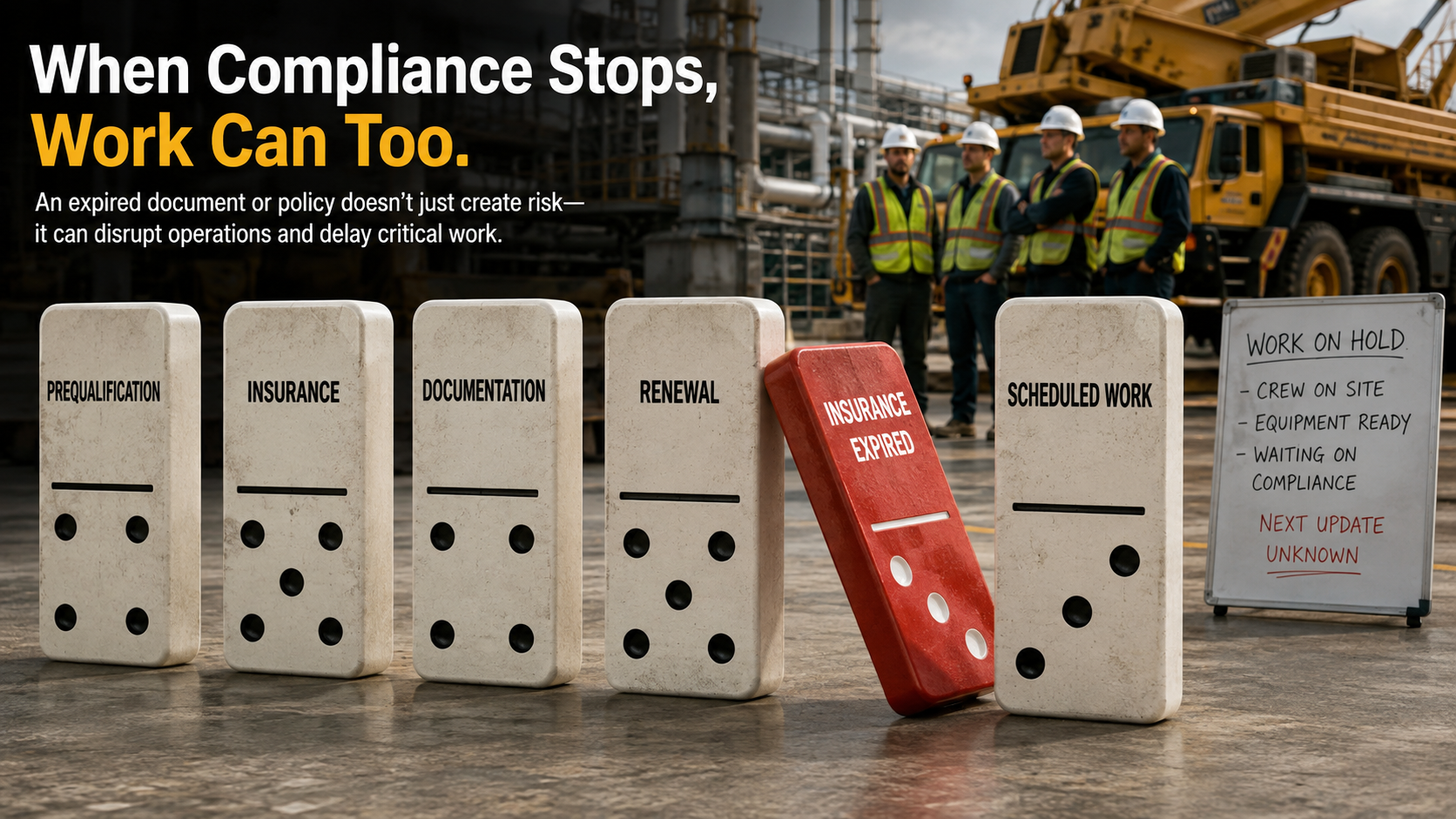
This is particularly important when organizations rely on contractors and third-party vendors, where the hiring company does not directly control the day-to-day safety practices of the workers performing the job. In these situations, risk is introduced at the point where information about a contractor’s safety programs, training, insurance coverage, and operating practices must be evaluated before work begins.
Because human judgment alone can be unreliable, organizations increasingly rely on structured verification systems to ensure that critical safety information is reviewed consistently and objectively. This is where platforms such as FIRST, VERIFY play an important role.
FIRST, VERIFY helps hiring clients manage contractor risk by structuring how safety and compliance infor-mation is collected, verified, and evaluated before contractors begin work. Rather than relying on informal reviews or incomplete documentation, the platform organizes contractor data into standardized question-naires, supporting documentation, and review workflows that help safety teams confirm that required programs, training, and insurance coverage are in place.
In effect, the system acts as an additional layer of organizational defense, reducing the likelihood that important risk indicators are overlooked because of time pressure, incomplete information, or simple human oversight. By making contractor qualification a structured and repeatable process, organizations can ensure that safety expectations are applied consistently across projects and over time.
Understanding the psychology of risk does not eliminate hazards. But it does change how organizations approach safety.
When leaders recognize that humans naturally underestimate risk, the goal shifts from simply urging workers to “be careful,” toward designing systems that anticipate human behavior. The result is a more resilient approach to safety; one that acknowledges the realities of human decision-making and builds safeguards accordingly.
In complex industrial environments, accidents rarely occur because people intend to take risks. More often, they occur because the human mind quietly adapts to danger over time. Recognizing that tendency and building systems that compensate for it is one of the most important steps organizations can take in creating workplaces that remain safe not just in theory, but in everyday practice.
Contact FIRST, VERIFY to learn how a well-designed contractor prequalification program can be an essential part of your safety system design.
You might also like