Strengthening Multi-Site Safety Programs: The Role of Consistent Contractor Verification Across Locations
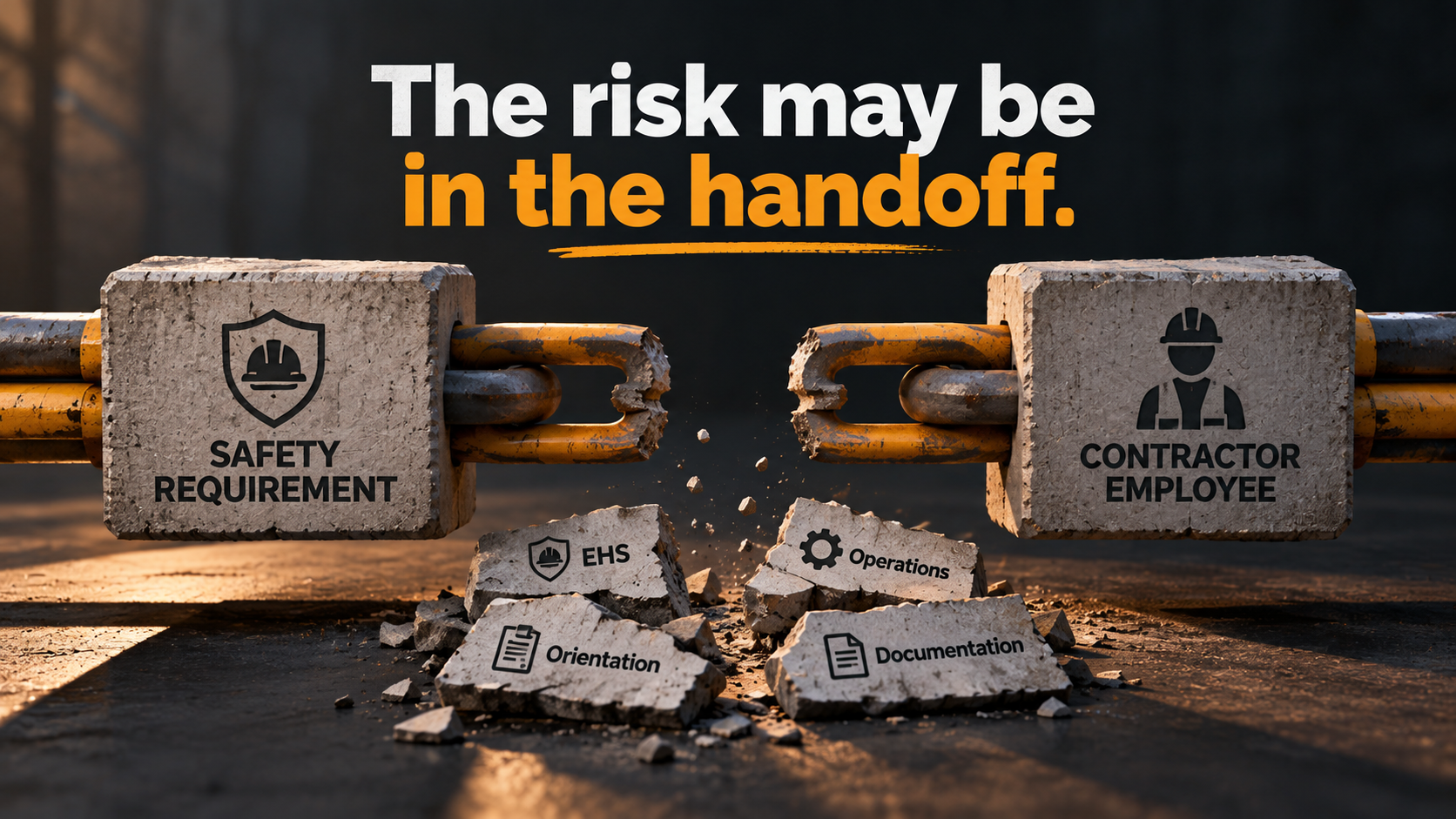
When safety standards vary by location, risk multiplies
Walk into two facilities owned by the same organization and you may find two completely different approa-ches to contractor management.
One site carefully reviews contractor safety documentation and verifies certificates of insurance.
- Another relies on email attachments and spreadsheets.
- A third may not verify contractor information until a problem occurs.
For Safety Directors, Risk Managers, and Operations leaders responsible for multi-site safety programs, this inconsistency creates a serious problem.
- Contractors move between locations.
- Work scopes change.
- Safety expectations vary.
And suddenly the organization no longer has a unified standard.
Without consistent contractor verification across locations, organizations lose visibility into contractor com-pliance, safety documentation, and insurance coverage.
That lack of alignment can create administrative burdens, compliance gaps, and increased operational risk.
This article explains why organizations with multiple facilities struggle to maintain consistent contractor over-sight and how a contractor verification platform helps unify safety and compliance standards across every location.
The Hidden Challenge in Multi-Site Safety Programs
Managing contractor safety at a single facility is already complex.
Now multiply that challenge across five, ten, or fifty locations. Each facility may have:
- Different contractor onboarding processes
- Different insurance tracking methods
- Different safety documentation requirements
- Different administrative teams managing contractors
The result? A fragmented contractor management process.
Instead of one coordinated safety program, organizations end up with dozens of independent systems.
This fragmentation creates several operational risks:
1. Inconsistent Contractor Prequalification Standards
Some locations perform detailed contractor reviews. Others rely on minimal documentation.
Without centralized contractor prequalification, organizations cannot ensure that every contractor meets the same safety and compliance expectations.
2. Limited Visibility Into Contractor Compliance
When contractor data is stored in spreadsheets, emails, or local folders, corporate safety teams cannot easily view contractor compliance across all sites.
This makes it difficult to answer critical questions such as:
- Which contractors are currently prequalified?
- Which contractor documents are missing or outdated?
- Which contractors are approved to work at multiple locations?
3. Insurance Documentation Gaps
Insurance compliance is one of the most common challenges in contractor management. Organizations often struggle to track certificates of insurance (COIs) across multiple facilities. Manual processes frequently lead to:
- Expired insurance documents
- Incorrect coverage information
- Missing endorsements
These gaps can expose organizations to financial and legal liability.
4. Administrative Burden on Local Teams
When contractor documentation is collected manually, local safety teams spend significant time managing paperwork instead of focusing on safety oversight. Tasks like:
- Requesting insurance updates
- Tracking documentation expiration
- Reviewing contractor safety information
quickly consume valuable operational resources.
Why Contractor Verification Across Locations Requires Centralization
The solution is not simply adding more administrative oversight. The real solution is standardization.
Organizations with successful multi-site safety programs establish a single system for managing contractor compliance across every facility.
This approach ensures that:
- Contractor safety documentation is collected in a consistent format
- Insurance information is stored and reviewed in one system
- Compliance standards remain consistent across locations
A centralized contractor verification platform creates this alignment by serving as a single system of record for contractor information.
How a Contractor Verification Platform Supports Multi-Site Safety Programs
A structured contractor management system helps organizations bring consistency to contractor compli-ance across locations.
Key capabilities include centralized prequalification, structured document collection, and standardized contractor records.
Centralized Contractor Prequalification
Contractor prequalification establishes a baseline standard for contractor safety and compliance.
Through structured questionnaires and documentation requirements, organizations can collect key infor-mation from contractors, including:
- Business information
- Insurance documentation
- Safety program information
- Supporting compliance documentation
This information is reviewed before contractors are approved to work. Prequalification ensures that contractors meet established safety and compliance requirements before entering a worksite.
The prequalification process typically follows a defined lifecycle:
- Contractors are invited to complete the prequalification questionnaire.
- Contractors submit required documentation and supporting materials.
- Submissions are reviewed for completeness and accuracy.
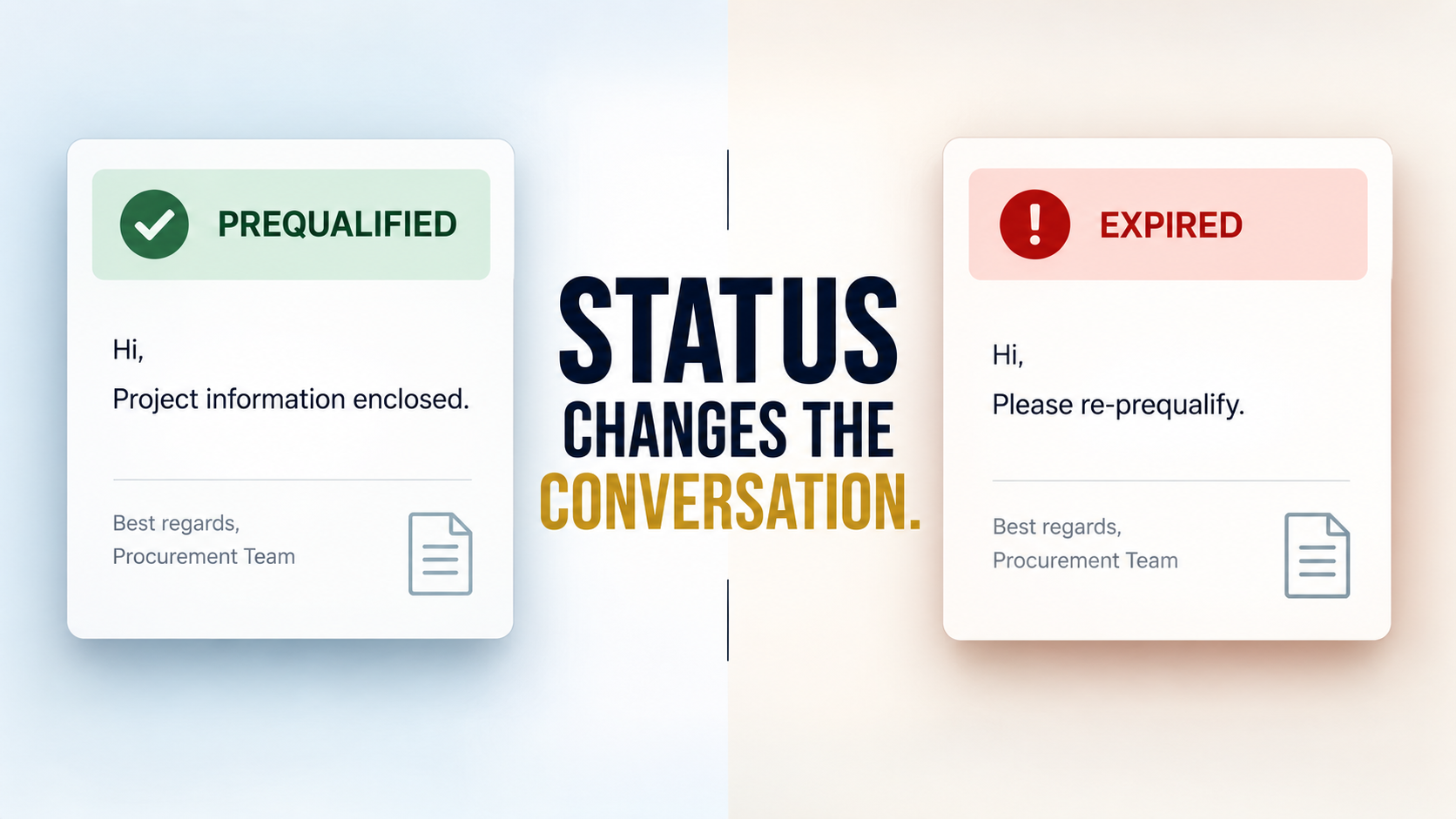
- Contractors receive a status indicating whether they are approved.
This structured approach helps organizations maintain consistent contractor standards across multiple locations.
Organized Contractor Compliance Documentation
A centralized platform provides a single location for storing contractor compliance information.
Instead of searching across email chains and spreadsheets, safety teams can access:
- Contractor safety documentation
- Insurance records
- supporting compliance documents
This centralized documentation improves transparency and allows safety leaders to quickly confirm contractor compliance status.
Structured COI Tracking
Tracking COIs is one of the most time-consuming aspects of contractor compliance management.
A centralized contractor compliance system allows organizations to collect and organize insurance documen-tation as part of the contractor prequalification process.
This structured approach helps ensure that insurance records are maintained in a consistent and accessible format across all facilities.
Consistent Standards Across All Locations
Perhaps the most important benefit of centralized contractor verification is consistency.
When every facility uses the same contractor management system:
- Safety expectations remain consistent
- Compliance requirements are standardized
- Documentation requirements are uniform
This alignment strengthens the overall integrity of the organization’s contractor safety compliance program.
Strengthening Contractor Risk Management Across Facilities
Organizations managing contractors across multiple locations face a common question:
How can we maintain the same safety and compliance standards everywhere? A centralized contractor verification platform provides the answer.
By standardizing contractor onboarding, organizing compliance documentation, and maintaining consistent contractor records, organizations can strengthen contractor risk management across their entire facility network.
Instead of relying on fragmented systems and manual processes, safety leaders gain a structured, scalable approach to contractor compliance management.
A Unified Approach to Contractor Compliance Management
Multi-site organizations cannot rely on inconsistent contractor management processes.
Without standardized verification procedures, contractor compliance gaps become almost inevitable.
A centralized contractor verification approach enables organizations to:
- Maintain consistent contractor standards across locations
- Organize contractor compliance documentation
- Support stronger contractor safety compliance programs
- Reduce administrative complexity for safety teams
This unified approach strengthens the effectiveness of multi-site safety programs and provides greater visibility into contractor compliance across the enterprise.
Final Thoughts
Managing contractor safety across multiple facilities requires more than good intentions. It requires structure.
When contractor verification is centralized, safety leaders gain a clear and consistent framework for evaluating contractor compliance across all locations.
This approach supports stronger contractor compliance management, improved documentation oversight, and more consistent contractor standards.
For organizations operating across multiple sites, consistency is not just a process improvement.
It is a safety strategy.
Strengthen Contractor Verification Across Your Locations
Managing contractor compliance across multiple facilities does not have to be fragmented.
FIRST, VERIFY provides a centralized contractor verification platform designed to support consistent contractor prequalification, organized documentation management, and structured contractor compliance oversight.
If your organization is looking to improve visibility, consistency, and efficiency across multi-site contractor programs, FIRST, VERIFY can help.
Learn how
FIRST, VERIFY can support your contractor compliance strategy across every location.
You might also like