Inside OSHA’s Most Frequently Cited Violations: What They Mean for Contractor Selection
When OSHA Shows Up, It’s Already Too Late
The most difficult OSHA conversations don’t start with a citation.
They start with a phone call.
A serious incident.
An unplanned shutdown.
A contractor injury that suddenly becomes your problem.
By the time OSHA arrives, the real question is no longer what happened - it’s “Why was that contractor on your site in the first place?”
Year after year, the same hazards dominate OSHA’s most frequently cited violations list: fall protection, machine guarding, lockout/tagout (LOTO), and hazard communication. These aren’t obscure technical issues. They’re foundational safety requirements that every qualified contractor should already have documented, trained, and enforced.
Which raises a critical issue for EHS, Risk, and Operations leaders:
If these violations are so common, how confident are you that your contractor selection process is actually identifying them before work begins?
This article examines what OSHA’s most frequent citations reveal about contractor safety gaps and how a structured, centralized contractor safety prequalification process helps organizations verify required programs and documentation before those gaps turn into incidents.
Why OSHA’s Top Violations Matter in Contractor Selection
OSHA enforcement data doesn’t just highlight unsafe work - it exposes systemic weaknesses in contractor safety programs.
The violations that appear most often are rarely caused by a lack of awareness. In most cases, they point to missing, outdated, or inconsistently applied contractor safety programs.
For hiring organizations, this has direct implications for:
- OSHA compliance for contractors
- Contractor onboarding decisions
- Pre-job risk exposure
- Legal defensibility following an incident
Selecting contractors without verifying required OSHA compliance documentation increases the likelihood that known hazards will go unmanaged on your site, under your supervision.
The Most Frequently Cited OSHA Violations and What They Reveal
1. Fall Protection: When Procedures Exist but Aren’t Enforced
Fall protection violations remain OSHA’s most cited issue, particularly in construction and maintenance activities.
What OSHA citations often indicate:
- Written fall protection programs exist but aren’t site-specific
- Training records can’t be produced during an inspection
- Equipment inspection documentation is missing or outdated
What this means for contractor selection:
A contractor claiming compliance isn’t enough. Organizations need to verify that contractors can produce written fall protection programs, training documentation, and supporting materials before elevated work begins.
2. Machine Guarding: Documentation Gaps with Serious Consequences
Machine guarding violations frequently stem from missing or improperly documented safeguards.
Common issues include:
- Incomplete machine guarding programs
- No written procedures for specific equipment
- Lack of documented training for operators
Contractor safety requirements don’t stop at the equipment.
They include the documentation that proves hazards were assessed, controls were defined, and employees were trained accordingly. Without centralized OSHA compliance documentation, these gaps often go unnoticed until OSHA asks for proof.
3. Lockout/Tagout (LOTO): High-Risk Work Without Verified Controls
LOTO violations are among the most dangerous because they involve uncontrolled energy sources.
OSHA frequently cites:
- Missing written LOTO programs
- Equipment-specific procedures not documented
- Inability to demonstrate employee training and comprehension
For contractor safety compliance, this is critical.
LOTO programs must be verified before contractors service equipment - not after an injury occurs.
4. Hazard Communication: The Foundation of Chemical Safety
Hazard communication violations often reflect administrative breakdowns rather than intentional noncompliance.
Common failures include:
- Missing or outdated written hazard communication programs
- No documentation of employee training
- Safety Data Sheets (SDS) not available or organized
These are basic OSHA compliance requirements, yet they remain among the most cited violations year after year.
The Root Cause: Inconsistent Contractor Safety Prequalification
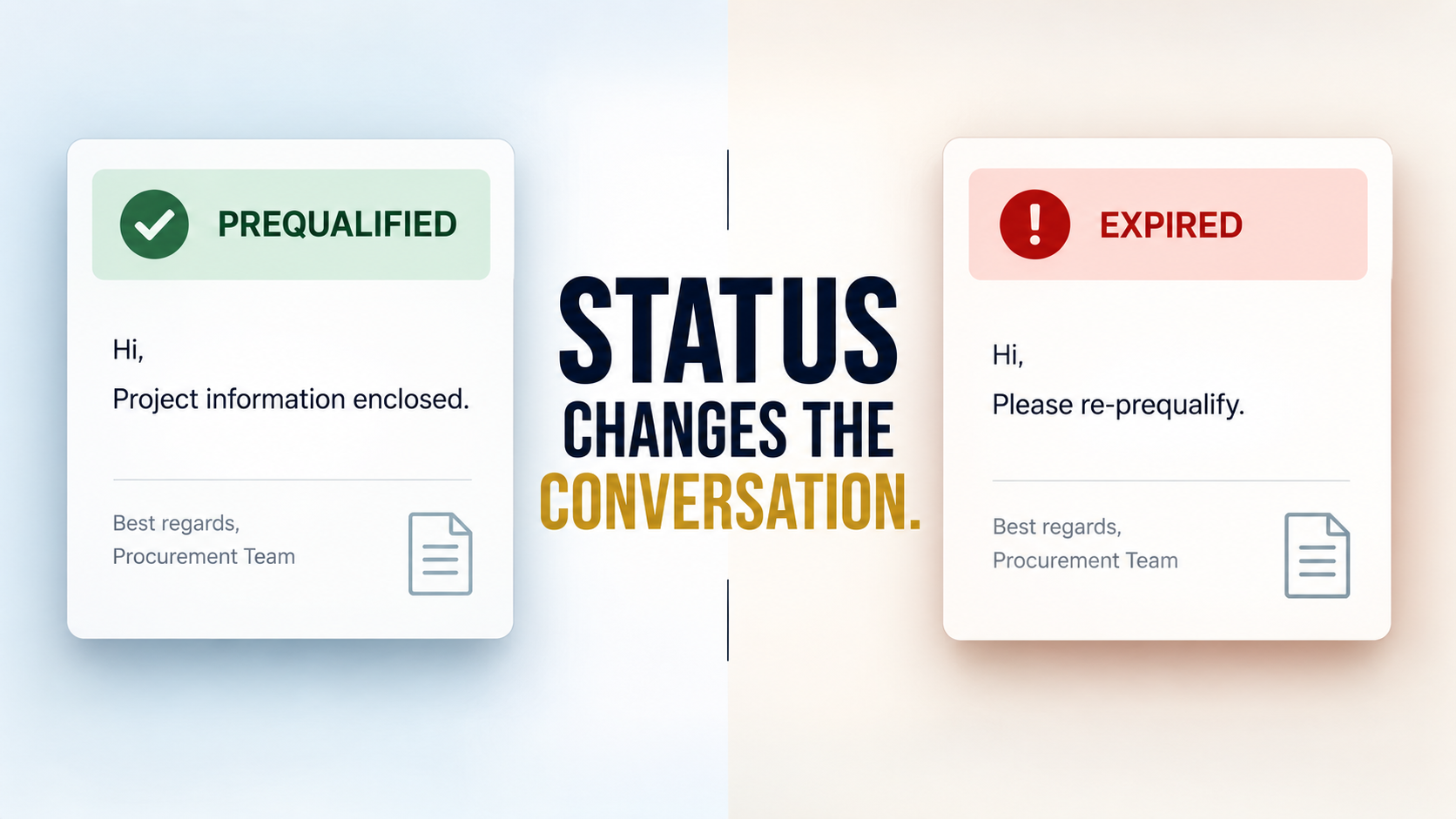
Despite the predictability of these violations, many organizations still rely on fragmented processes to evaluate contractors:
- Emailing documents back and forth
- Tracking requirements in spreadsheets
- Reviewing safety programs inconsistently or not at all
This creates several challenges:
a. Manual Tracking Masks Risk
Critical OSHA compliance documentation is scattered across inboxes, file shares, and local drives.
b. Inconsistent Prequalification Standards
Different sites and departments apply different contractor safety requirements.
c. Limited Verification
Contractors attest that programs exist but supporting documentation is never reviewed until it’s too late.
The result is a contractor safety compliance process that appears thorough but fails under scrutiny.
What Effective Contractor Selection Looks Like in Practice
Reducing exposure to OSHA violations doesn’t require predicting incidents. It requires verifying fundamentals.
An effective contractor safety prequalification process should confirm before work begins that contractors can produce:
- Required written safety programs relevant to their scope of work
- OSHA compliance documentation such as safety history and forms
- Training records and supporting materials
- Current certificates of insurance (COIs) that meet defined requirements
This verification must be consistent, centralized, and repeatable across locations.
How FIRST, VERIFY Supports OSHA Focused Contractor Selection
FIRST, VERIFY was designed to help organizations move from reactive enforcement to proactive verification.
Centralized OSHA Compliance Documentation
The platform gathers and organizes contractor safety documentation including required safety programs, supporting records, and OSHA-related materials into a single, accessible system. This allows teams to review contractor safety requirements before mobilization, not during an inspection.
Structured Contractor Safety Prequalification
Using client-defined templates, FIRST, VERIFY applies consistent prequalification standards so contractors pro-vide the correct documentation based on risk level and scope of work.
Certificate of Insurance Management
COIs are collected, reviewed against requirements, tracked for expiration, and displayed clearly within each contractor profile reducing delays and compliance gaps.
Optional Remote Safety Audits
For organizations that need deeper verification, FIRST, VERIFY conducts remote reviews of contractor safety programs and supporting materials to confirm implementation - not just existence.
Ongoing Visibility, Not One Time Review
Annual renewals ensure contractor information stays current, supporting continuous OSHA compliance for contractors across projects and locations.
A Practical Checklist for OSHA Informed Contractor Selection
Before approving a contractor for work, confirm that your contractor safety compliance process verifies:
- Required written safety programs aligned with OSHA standards
- Training documentation and supporting materials
- Current COIs
- Consistent review criteria across sites
- Centralized access for EHS, Risk, and Operations teams
If any of these rely on assumptions rather than verification, OSHA citations become a matter of when, not if.
The Real Cost of Ignoring OSHA Patterns
OSHA’s most frequently cited violations are predictable.
Which means the exposure is preventable.
Organizations that treat contractor selection as an administrative task often discover during an inspection that critical documentation was never verified. Those that treat it as a risk management process gain clarity, consistency, and confidence long before work begins.
FIRST, VERIFY helps organizations do exactly that.
Ready to Strengthen Your Contractor Safety Compliance Process?
If OSHA’s most common violations reflect gaps in contractor safety programs, the solution starts before contractors arrive onsite.
Learn how FIRST, VERIFY helps EHS, Risk, and Operations leaders centralize OSHA compliance documentation, standardize contractor safety prequalification, and reduce exposure without adding administrative burden.
Request a
demonstration today.
You might also like