The Contractor Documentation Problem Behind Fall Protection Risk
A contractor's file can look complete right up until someone asks a more difficult question.
The insurance certificate is current. The safety questionnaire has been submitted. The contractor's injury history has been reviewed, and procurement has everything needed to move the approval forward.
Then someone from the safety department asks: “What do we actually know about how this contractor manages fall protection?”
It is a reasonable question, particularly when the work involves roofing, structural steel, or maintenance performed at height. But the answer is not always found in the documents used to qualify the contractor.
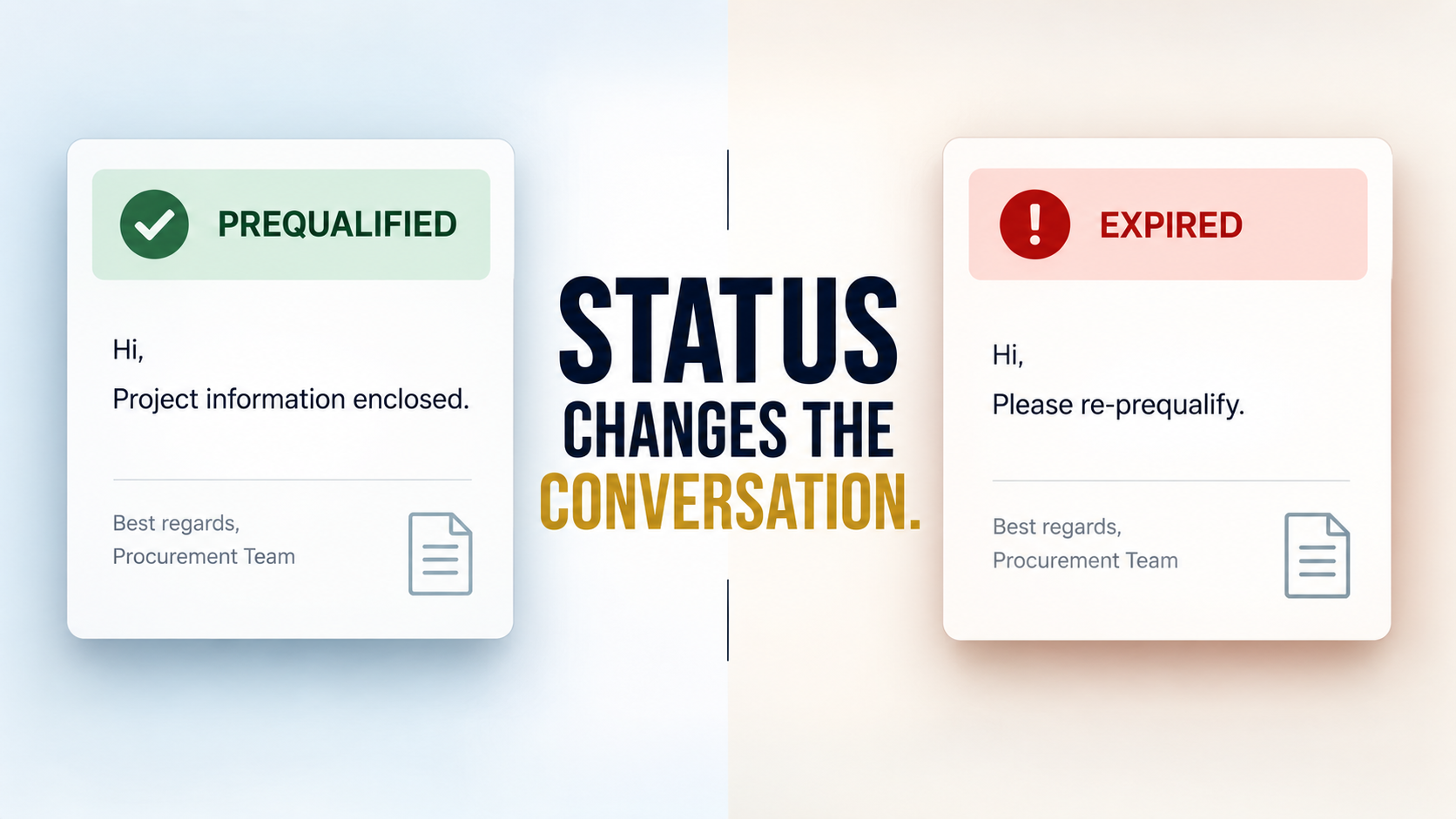
That is where an important distinction emerges. A contractor can satisfy an organization's prequalification requirements without having undergone a detailed review of its fall protection program.
Neither process is necessarily deficient. They serve different purposes. Problems arise when organizations treat them as interchangeable.
The Difference Between Having Records and Understanding Risk
Contractor prequalification is often designed around a practical business need: establish consistent requirements and determine which contractors are eligible to perform work.
Organizations may review OSHA injury and illness records, Experience Modification Rates (EMRs), insurance coverage, licenses, and other qualification information. These records are valuable because they create a common basis for evaluating contractors.
But they primarily describe a contractor's qualifications and historical performance. They do not necessarily explain how a specific safety program operates.
Consider the difference between knowing that a contractor has an acceptable safety record and knowing whether its employees have received appropriate fall protection training. Both matter, but one cannot automatically establish the other.
This distinction is especially relevant to elevated work.
In its fiscal year 2025 list of frequently cited standards, the Occupational Safety and Health Administration ranked fall protection general requirements, 29 CFR 1926.501, first among standards cited during federal inspections. Fall protection training, 29 CFR 1926.503, also appeared among the ten most frequently cited standards. Citation rankings do not tell us whether a particular contractor is safe or unsafe. They do, however, identify requirements that continue to present compliance challenges.
For an organization hiring contractors, the practical lesson is straightforward: historical performance and evidence of safety program implementation deserve separate consideration.
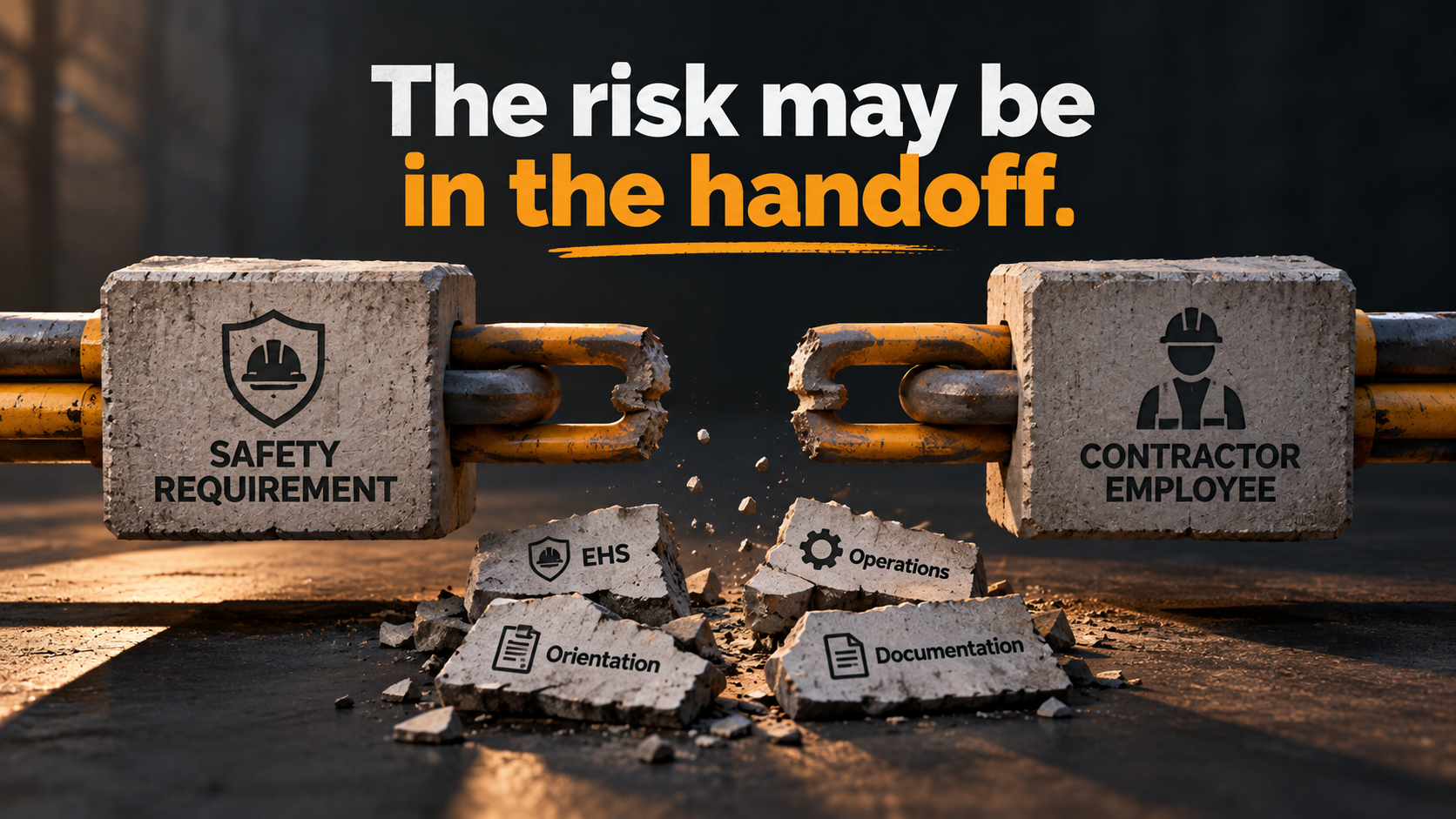
Why Information Gets Lost Between Departments
The difficulty is not always a lack of information. Sometimes it is the way information moves through an organization.
Procurement may be responsible for ensuring that a contractor completes the qualification process. Risk management may review certificates of insurance (COIs). Safety personnel may evaluate OSHA records or determine whether additional program documentation is needed.
Each department has a legitimate responsibility, but the information does not always come together in a way that supports a clear decision.
The resulting problem is subtle. A contractor may be approved because every required administrative step was completed, while an important question about the proposed work remains unanswered.
This does not mean every contractor should undergo an extensive safety audit. That would consume time and resources without necessarily improving decisions.
It means the review process should distinguish between general eligibility and the specific hazards associated with the work.
A contractor performing routine, low-hazard services presents a different exposure than one whose employees will regularly work near unprotected edges.
Are those differences reflected in the organization's contractor review requirements, or does every contractor move through essentially the same process?
The answer reveals a great deal about how effectively the organization connects its qualification procedures to operational risk.
Fall Protection Requires More Than a Written Policy
Written safety programs have an important purpose. They establish expectations and describe the procedures employees are expected to follow.
But the existence of a program is only one part of the picture.
Under 29 CFR 1926.503, employers must provide training that enables employees exposed to fall hazards to recognize those hazards and understand the procedures needed to minimize them. The regulation also requires employers to maintain written training certification records.
That requirement points to a useful distinction between policy and implementation.
A written fall protection program explains what should happen. Training records help establish whether employees have received instruction. Documentation of inspections and enforcement practices can provide further evidence of how the contractor administers its safety responsibilities.
None of these records guarantees that employees will follow procedures on a particular jobsite. Field conditions, supervision, equipment, and individual decisions still matter.
Nevertheless, reviewing supporting documentation can reveal questions that a general qualification questionnaire may not answer.
If a contractor has a written fall protection program, what evidence would give you confidence that the program is being implemented?
That question is more useful than simply asking whether the contractor has a program.
A More Practical Way to Review Higher-Risk Contractors
The strongest contractor review processes are not necessarily the most demanding. They are the ones that apply the right level of scrutiny to the right work.
For elevated work, an organization might begin with standard prequalification and then determine whether the nature of the activity warrants a more detailed review of fall protection documentation.
A remote safety audit can serve that purpose.
Unlike an onsite inspection, a remote audit examines selected written safety programs and supporting records. Depending on the audit scope, those records may include training documentation, evidence of employee comprehension, inspection records, incident investigations, and enforcement practices.
The objective is not to predict whether an accident will occur. Nor can a documentation review confirm what employees are doing in the field.
Its value lies in examining whether the contractor can provide evidence supporting the safety practices it describes.
This approach also recognizes an operational reality: safety departments have limited time. Reviewing every program for every contractor can divert attention from activities that present greater hazards.
A more selective process allows organizations to concentrate detailed reviews on work categories where additional documentation would be most useful.
Consistency Matters as Much as Scrutiny
Even a carefully designed review process can become ineffective when requirements vary from one facility or department to another without a clear reason.
Contractors may be asked for different information by different locations. Safety personnel may spend time searching for records already collected elsewhere. Renewal dates and insurance requirements may be managed separately.
These administrative issues can affect the quality and timeliness of decisions.
Centralizing contractor information helps establish a consistent foundation. It does not replace professional judgment, but it can make the information needed for that judgment easier to find.
This is where services such as those provided by FIRST, VERIFY fit into the broader process. Its standard prequalification service uses client-defined requirements to collect and review contractor information.
Separately requested remote safety audits examine selected safety programs and supporting documentation.
The distinction is important. Standard prequalification does not constitute a safety program audit, and a remote audit does not replace onsite observation.
Organizations benefit from understanding what each review establishes rather than expecting one process to answer every question.
The Question Worth Asking Before Work Begins
Fall protection risk is ultimately managed where the work takes place. Employees need appropriate training, equipment, procedures, and supervision. No collection of documents can substitute for those responsibilities.
But the decisions made before a contractor arrives onsite still matter.
A well-organized prequalification process establishes a consistent starting point. A risk-based approach helps determine when additional examination is justified. Reviewing evidence of safety program implementation can then provide a more complete understanding of the contractor's documented practices.
The lesson is not that organizations need more paperwork. It is that they need to be more deliberate about the purpose of the paperwork they already require.
Before approving the next contractor for elevated work, consider one question:
Do we have the documents required to approve this contractor, or do we also have the information needed to understand how it manages the hazards of the work?
The difference is worth knowing before the job begins.
You might also like