




Screening the Contractors and Suppliers You Use
Put simply… FIRST, VERIFY offers one place for companies across industries to mitigate risk by:
- Prequalifying Contractors & Suppliers (to safety, insurance, and business requirements)
- Hosting Your Safety Training Online
- Managing Certificates of Insurance
- Auditing Your Contractors
- Managing and Storing Critical Documents

Do your vendors have the expertise and track record you need to avoid risk?

Our Services
Solutions for Managing the Risk Created by Your Contractors and Suppliers

Online Safety Orientation/Training
We can help with every type of installation, maintenance and repair.

Certificate Management Service
We can help with every type of installation, maintenance and repair.

Expert tips
Visit our blog for the latest industry updates and tips.
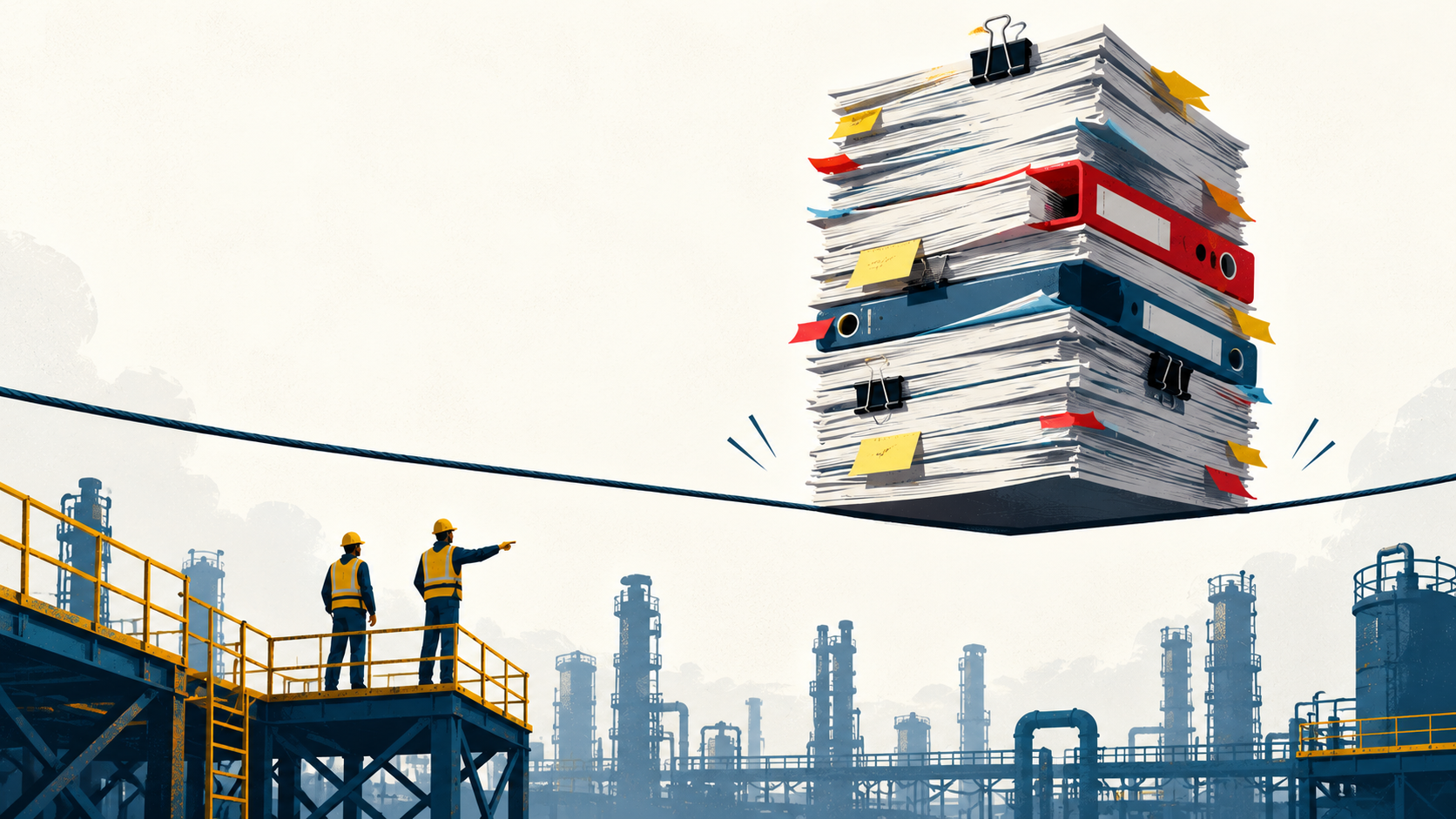
EDITOR'S NOTE: Our friend Erica Montefusco , Senior VP, Risk & Compliance at PROtect, wrote the following post on LinkedIn. We liked it so much we asked if we could republish it as a guest blog. This is the first of four com-panion pieces on resilience and leadership, which will appear in future guest blogs. _______________ There is a misconception that industrial risk leadership is rigid. Regulations. Standards. Checklists. Audits. Metrics. On the surface, it can look procedural. But the longer I’ve worked in risk, safety, and compliance, the more I’ve realized something unexpected: This career is not about rigidity. It’s about exploration. Curiosity Is a Risk Control Before I worked in industrial environments, I was fascinated by anthropology, archaeology, and scientific dis-covery. Why civilizations rise. Why they collapse. How systems evolve. How small environmental or cultural shifts compound over time. That lens never left me. In industrial risk, the same principles apply. Organizations don’t experience catastrophic failure without signals. Drift occurs gradually. Norms shift quietly. Pressure normalizes shortcuts. If you’re not curious, you miss it. Curiosity is not abstract in this profession. It’s protective. Asking: Why is this procedure written this way? Why are near-miss reports declining? Why does this site feel different than others? Why did supervision behavior change under schedule pressure? Risk leadership requires scientific thinking - observation, hypothesis, pattern recognition. It is less about enforcement. More about investigation. Cultural Understanding Shapes Safety Culture Traveling the world, experiencing different countries, belief systems, and social norms, it reshaped how I view organizational culture. Every culture, whether national or corporate, has invisible rules. What is spoken openly. What is avoided. Who challenges authority. Who doesn’t. Safety culture operates the same way. You cannot implement risk controls without understanding cultural dynamics. If speaking up is culturally discouraged, Stop Work Authority will fail. If production pressure is celebrated as heroism, incidents will rise. If environmental stewardship is treated as compliance instead of responsibility, corners will eventually be cut. Leadership requires cultural literacy. And cultural literacy begins with humility. Exploration Builds Resilience Exploration, whether physical or intellectual, builds resilience. When you’ve navigated unfamiliar terrain, when you’ve faced environments outside your comfort zone, when you’ve experienced adversity and uncertainty… you learn something essential: Calm is a choice. In industrial risk leadership, calm is not optional. Emergencies happen. Incidents occur. Regulators ask hard questions. Executives look to you for clarity. Your tone becomes the baseline for everyone else. Resilience is not bravado. It’s steadiness under pressure. That steadiness is built long before crisis arrives. It is built through challenge. Scientific Curiosity and Regulatory Discipline Risk work is often viewed as regulatory. But at its core, it is scientific. Observe. Measure. Analyze. Adjust. Environmental compliance demands precision. Safety programs demand behavioral understanding. Risk mitigation demands systems thinking. The most effective leaders in this space are not just rule-followers. They are investigators. They want to understand: What is really happening? What patterns are emerging? What assumptions are we making? Where is drift occurring? Exploration and science share a common foundation: Intellectual honesty. If something isn’t working, you change it. If evidence contradicts belief, you adapt. That mindset has shaped how I lead. The Connection Between Stewardship and Leadership The longer I work in this field, the more I see risk leadership as stewardship. We are entrusted with: People’s safety. Community trust. Environmental integrity. Corporate reputation. Financial stability. That is not a small responsibility. Travel has taught me how interconnected systems are. Environmental work reinforces that daily. Air doesn’t stop at property lines. Water doesn’t respect ownership boundaries. Reputation doesn’t isolate itself to a single event. Leadership requires long-term thinking. Exploration teaches you to look beyond the immediate horizon. Why This Matters Now We are entering a period of increased transparency. AI-driven analytics. Real-time environmental monitoring. Data visibility at unprecedented levels. The future risk leader must be more than compliant. They must be: Curious. Culturally aware. Scientifically grounded. Emotionally steady. Ethically anchored. Industrial leadership and exploration are not opposites. They are parallel disciplines. Both require courage. Both require humility. Both require adaptability. Both require respect for forces larger than yourself. And both demand resilience. Closing Reflection If there is one thing my professional career and personal philosophy share, it is this: Never accept the surface. Look deeper. Ask harder questions. Challenge assumptions. Stay steady under pressure. Protect what matters. Risk leadership, like exploration, is not about control. It is about understanding. And understanding is what ultimately keeps people safe.