Caring About Your Safety Culture - Safety Risks

June 14, 2019

The remodeling business can expose workers to safety risks not found in static environments like manufacturing: Because the work environment changes continuously, lack of familiarity with each location’s potential dangers alters how those hazards are monitored and avoided. This means that work procedures should emphasize the less tangible skill of situational awareness. This requires an attitude of caring and vigilance on the part of the employee – a genuine commitment to safety.

How do your employees get the right attitude about safety so they can anticipate and avoid hazards? Certainly, an emotionally powerful event – experiencing or witnessing a serious injury – can have a lasting impact and influence attitudes toward safety. But you can’t wait for a harrowing near-miss situation to motivate the rank and file, and you certainly don’t want to orchestrate one just to make safety training more effective!

While it would be nice if all your employees would memorize OSHA 29 CFR 1926.850(b) (Subpart T), plus the other 10,000 provisions in OSHA’s Construction Industry Regulations, the reality is that many people feel invincible and view safety training like they did math homework. This is especially so if their training is focused on dry rules and regulations rather than behavior and culture. That can result in a lack of caring – of careLESSness – that increases the likelihood of injury, and the effort needed to prevent it.

It is said that behavior influences attitude and attitude influences behavior. One of the most effective means of influencing both is through peer pressure, or validation (most youngsters probably wouldn’t try smoking otherwise). Since perceived motives can affect how a message is heard, it matters who delivers that message. Because of this, a rank and file employee can often be more successful influencing fellow employees than a manager can. As such, employees who demonstrate interest and aptitude with safety procedures should be recognized and used as models for desired behavior. Any employees who have personal experience, whether from a near-miss or actual injury to themselves or a co-worker, should be encouraged to share that with the group.

For even greater impact at your safety meetings, try to recruit individuals from outside the company who have suffered serious, even disabling, workplace injuries. If you can recruit someone like this, ask them to explain in detail how their injury has affected their lives. The more vivid and personal the story, the more likely it is that employees will remember and care about it in the future. A dramatic message can have an authentic emotional impact on your employees, increasing the potential for a breakthrough in attitude.

Many years ago, a wise karate instructor in Okinawa named Gichin Funakoshi taught his students a profound lesson that we should all heed today, for very similar reasons. His simple message was, “Carelessness… comes before accidents.”

Read Next - Creating and keeping a safety culture

You might also like

By Erica Montefusco March 4, 2026
EDITOR'S NOTE: Our friend Erica Montefusco , Senior VP, Risk & Compliance at PROtect, wrote the following post on LinkedIn. We liked it so much we asked if we could republish it as a guest blog. This is the first of four com-panion pieces on resilience and leadership, which will appear in future guest blogs. _______________ There is a misconception that industrial risk leadership is rigid. Regulations. Standards. Checklists. Audits. Metrics. On the surface, it can look procedural. But the longer I’ve worked in risk, safety, and compliance, the more I’ve realized something unexpected: This career is not about rigidity. It’s about exploration. Curiosity Is a Risk Control Before I worked in industrial environments, I was fascinated by anthropology, archaeology, and scientific dis-covery. Why civilizations rise. Why they collapse. How systems evolve. How small environmental or cultural shifts compound over time. That lens never left me. In industrial risk, the same principles apply. Organizations don’t experience catastrophic failure without signals. Drift occurs gradually. Norms shift quietly. Pressure normalizes shortcuts. If you’re not curious, you miss it. Curiosity is not abstract in this profession. It’s protective. Asking: Why is this procedure written this way? Why are near-miss reports declining? Why does this site feel different than others? Why did supervision behavior change under schedule pressure? Risk leadership requires scientific thinking - observation, hypothesis, pattern recognition. It is less about enforcement. More about investigation. Cultural Understanding Shapes Safety Culture Traveling the world, experiencing different countries, belief systems, and social norms, it reshaped how I view organizational culture. Every culture, whether national or corporate, has invisible rules. What is spoken openly. What is avoided. Who challenges authority. Who doesn’t. Safety culture operates the same way. You cannot implement risk controls without understanding cultural dynamics. If speaking up is culturally discouraged, Stop Work Authority will fail. If production pressure is celebrated as heroism, incidents will rise. If environmental stewardship is treated as compliance instead of responsibility, corners will eventually be cut. Leadership requires cultural literacy. And cultural literacy begins with humility. Exploration Builds Resilience Exploration, whether physical or intellectual, builds resilience. When you’ve navigated unfamiliar terrain, when you’ve faced environments outside your comfort zone, when you’ve experienced adversity and uncertainty… you learn something essential: Calm is a choice. In industrial risk leadership, calm is not optional. Emergencies happen. Incidents occur. Regulators ask hard questions. Executives look to you for clarity. Your tone becomes the baseline for everyone else. Resilience is not bravado. It’s steadiness under pressure. That steadiness is built long before crisis arrives. It is built through challenge. Scientific Curiosity and Regulatory Discipline Risk work is often viewed as regulatory. But at its core, it is scientific. Observe. Measure. Analyze. Adjust. Environmental compliance demands precision. Safety programs demand behavioral understanding. Risk mitigation demands systems thinking. The most effective leaders in this space are not just rule-followers. They are investigators. They want to understand: What is really happening? What patterns are emerging? What assumptions are we making? Where is drift occurring? Exploration and science share a common foundation: Intellectual honesty. If something isn’t working, you change it. If evidence contradicts belief, you adapt. That mindset has shaped how I lead. The Connection Between Stewardship and Leadership The longer I work in this field, the more I see risk leadership as stewardship. We are entrusted with: People’s safety. Community trust. Environmental integrity. Corporate reputation. Financial stability. That is not a small responsibility. Travel has taught me how interconnected systems are. Environmental work reinforces that daily. Air doesn’t stop at property lines. Water doesn’t respect ownership boundaries. Reputation doesn’t isolate itself to a single event. Leadership requires long-term thinking. Exploration teaches you to look beyond the immediate horizon. Why This Matters Now We are entering a period of increased transparency. AI-driven analytics. Real-time environmental monitoring. Data visibility at unprecedented levels. The future risk leader must be more than compliant. They must be: Curious. Culturally aware. Scientifically grounded. Emotionally steady. Ethically anchored. Industrial leadership and exploration are not opposites. They are parallel disciplines. Both require courage. Both require humility. Both require adaptability. Both require respect for forces larger than yourself. And both demand resilience. Closing Reflection If there is one thing my professional career and personal philosophy share, it is this: Never accept the surface. Look deeper. Ask harder questions. Challenge assumptions. Stay steady under pressure. Protect what matters. Risk leadership, like exploration, is not about control. It is about understanding. And understanding is what ultimately keeps people safe.
Centralized Contractor Data
March 4, 2026
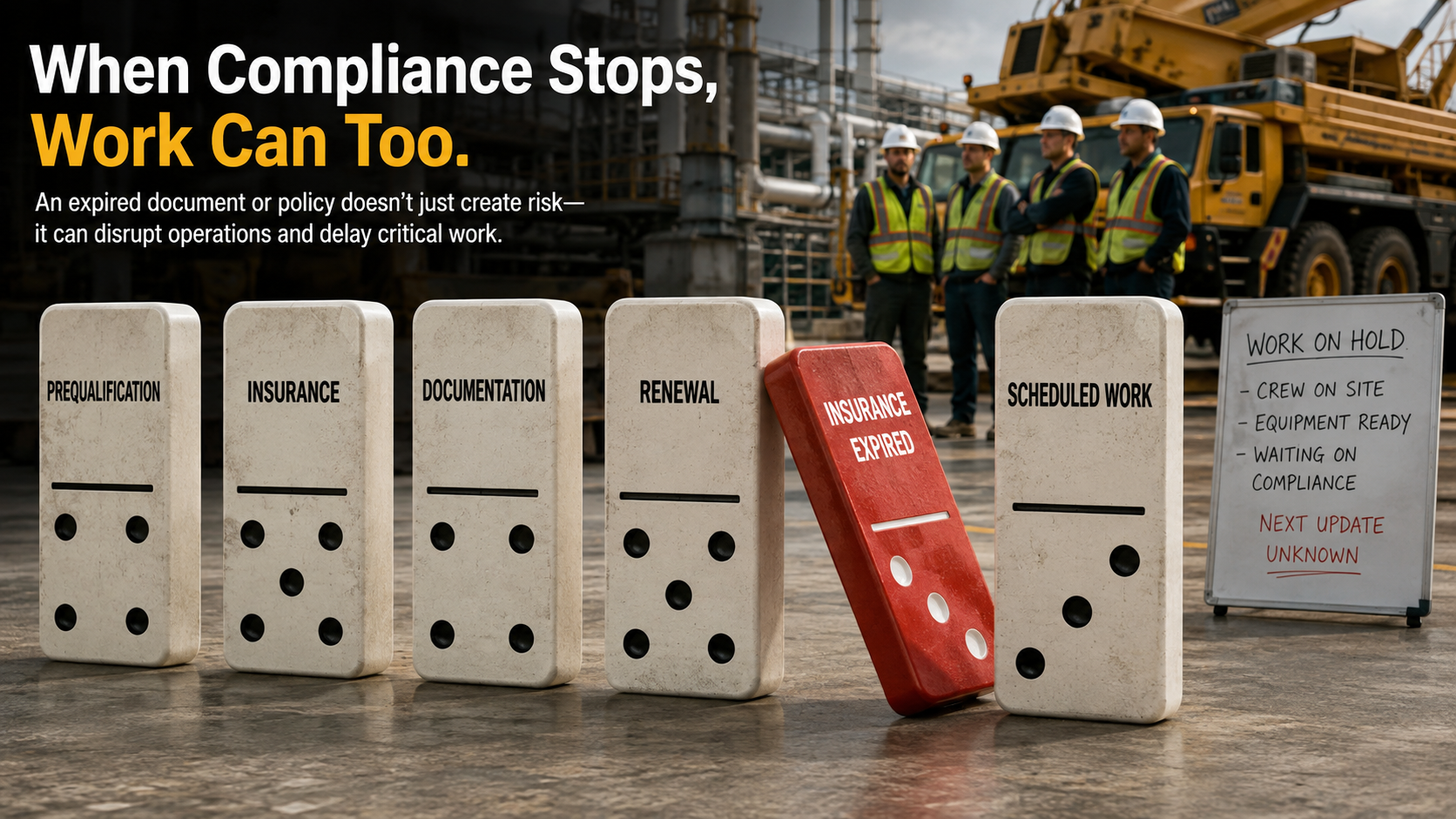
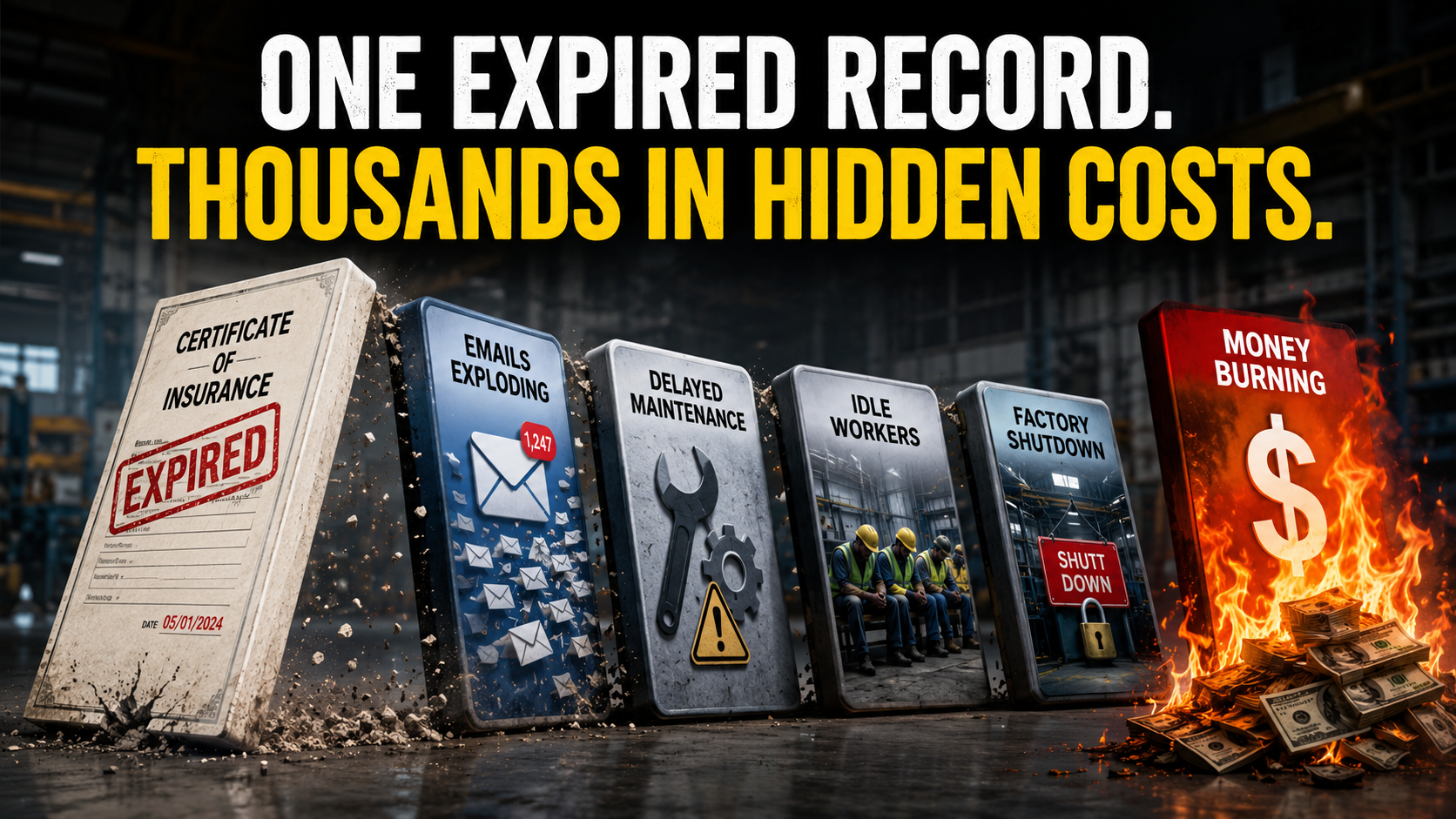
Learn how centralized contractor data, automated COI tracking, and structured contractor prequalification reduce administrative burden while strengthening safety...
Contractor Training Verification & Compliance
February 24, 2026
Learn why contractor training verification and proper documentation reduce risk, improve OSHA compliance, and protect your organization.

Book a Service Today