What OSHA’s Most-Cited Violations Reveal About Contractor Documentation Gaps
A plant manager once described contractor onboarding to us in a way that stuck.
He said the safety team had a strong program, the procurement team had solid requirements, and the operations team knew which contractors they trusted. The problem was that no one could see the same information at the same time.
A contractor would show up for maintenance work. Operations believed the contractor was approved because they had used them before. Procurement believed the insurance was handled because a certificate had been submitted months earlier. Safety wanted to confirm training and documentation before work started. Everyone was acting in good faith.
The system just was not helping them.
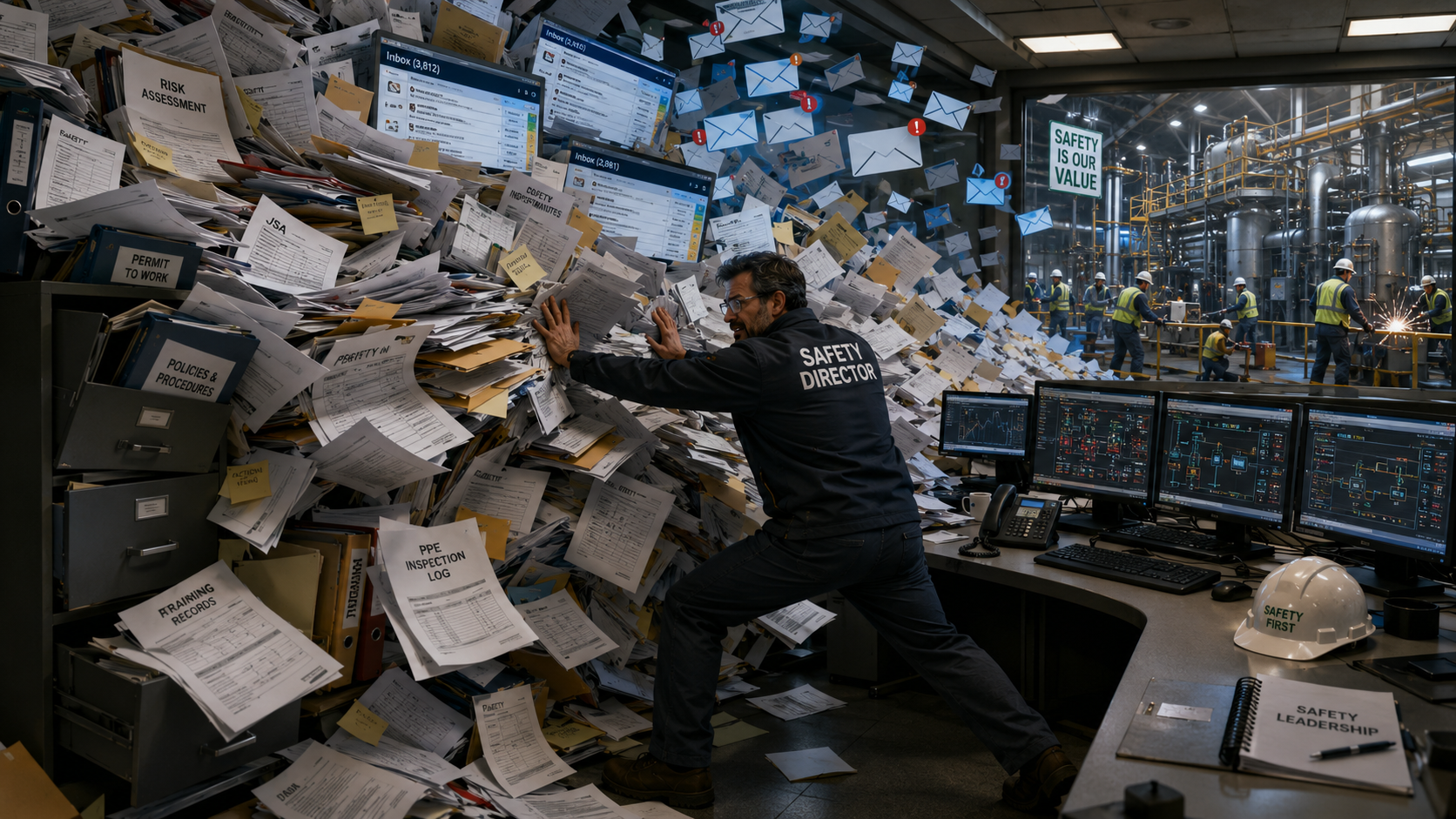
That is usually where contractor documentation problems begin. Not with negligence. Not with indifference. More often, they begin with scattered information, unclear ownership, and a process that works well enough until the day it does not.
OSHA’s most-cited violations are useful because they show where that breakdown often becomes visible. In fiscal year 2025, OSHA’s most frequently cited standards included fall protection, hazard communication, lockout/tagout, respiratory protection, and machine guarding. OSHA says it publishes this list so employers can identify and correct recognized hazards before inspections occur.
Those categories are familiar to anyone who has spent time around industrial, construction, utility, or maintenance work. They are also a reminder that many safety problems are not created in the field alone. They are often shaped by decisions made before work begins.
The Issue Is Usually Not One Missing Document
When a contractor documentation problem surfaces, it is tempting to treat it as a paperwork issue.
- The COI expired.
- The orientation record was missing.
- The safety documentation was incomplete.
- The contractor had not renewed prequalification.
Those are real problems, but they are usually symptoms of a larger issue: the organization does not have a consistent way to collect, review, update, and use contractor information.
In a smaller operation, a few experienced people can often make an informal system work. They know which contractors are reliable. They remember who submitted what. They can pick up the phone and solve problems quickly.
That becomes harder as the organization grows. Multiple sites create different habits. Procurement, safety, risk, and operations each develop their own files. Contractors work for more than one department. Insurance renewals happen throughout the year. Training requirements vary by location or scope of work.
Eventually, the process depends less on the standard and more on who happens to be involved that day.
That's where risk enters.
OSHA’s Top Citations Point Back to Readiness
Take fall protection. OSHA listed fall protection as the most frequently cited standard for fiscal year 2025, and the National Safety Council noted that it has led the list for 15 straight years. (osha.gov) (National Safety Council)
At first glance, fall protection sounds like a field execution issue. Either the right protection is in place, or it is not. But from a contractor management perspective, there is a question that comes earlier: what did the organization know about the contractor before elevated work was scheduled?
Had the contractor completed prequalification? Was the required safety documentation submitted? Was the certificate of insurance current and aligned with the company’s requirements? Were training records or site-specific orientation records available if required?
The same pattern applies to lockout/tagout. OSHA’s control of hazardous energy standard is one of the most commonly cited standards because maintenance and servicing work often involve serious exposures. A contractor may be qualified for the trade, but the hiring organization still needs a reliable way to confirm that its own requirements have been met before the work starts.
This is not about creating paperwork for its own sake. It's about reducing ambiguity before people are exposed to hazards.
Information Flow Is a Safety Control
One lesson we've learned over the years is that information flow is often treated as an administrative matter when it is really an operational control.
If a safety manager cannot quickly determine whether a contractor has completed the required steps, that is not merely inconvenient. It affects the quality of the decision being made. If procurement cannot see whether insurance is current, contract administration becomes disconnected from risk. If operations cannot easily distinguish between a contractor that is fully prequalified and one that is still incomplete, scheduling pressure can begin to shape safety decisions.
This is where organizations get into trouble. They may have good requirements, but the requirements are not connected to the point of decision.
A question worth asking is this: if a contractor arrived tomorrow morning for work involving height, hazardous energy, chemicals, respiratory exposure, or moving machinery, could the right people confirm readiness without searching through email?
If the answer is no, the organization may not have a safety philosophy problem. It may have an information architecture problem.
The Human Side of Documentation Gaps
Most documentation gaps are not caused by people trying to bypass the system. They're caused by normal business pressure. A project is behind schedule. A contractor has worked onsite before. A supervisor assumes another department has reviewed the file. A COI was submitted, but no one noticed the renewal date. A training record exists, but it is stored in a separate system. A location has a local workaround that no one at corporate fully understands. None of these situations feels dramatic in the moment. They feel routine. That is the danger.
The Bureau of Labor Statistics reported 5,070 fatal work injuries in the United States in 2024. Construction and extraction occupations alone accounted for 1,032 fatalities, with fatal falls, slips, and trips remaining a significant exposure in that group.
Statistics like that should not be used to dramatize every administrative failure. But they do remind us that high-risk work deserves a disciplined front end. The quality of preparation matters.
Consistency Matters More Than Intensity
Many organizations respond to gaps by working harder. Safety teams chase more documents. Procurement sends more reminders. Operations asks for faster approvals. Someone builds another spreadsheet. That may solve the immediate problem, but it does not always improve the system.
The better question is: can the same contractor requirement be applied consistently across locations, departments, and scopes of work?
Consistency is where structured prequalification becomes useful. FIRST, VERIFY’s role, when relevant, is not to replace a company’s safety judgment. It is to help collect, organize, verify, and update contractor information according to client-defined requirements. The process can include contractor business information, safety documentation, supporting records, COI management, licenses and certifications, master agreements, and annual renewal.
That kind of structure helps because it gives different departments a common reference point. Safety, procurement, risk, and operations may still view contractor readiness through different lenses, but they are no longer working from different versions of the truth.
The Tradeoff: Practical Review Versus Perfect Knowledge
It is important to be realistic. No documentation process can prove that every safe practice will be followed in the field. A contractor may have a strong safety history and still make a mistake. A COI may be current and still not eliminate exposure. A completed orientation does not replace supervision, planning, or job-specific controls. Documentation is not the whole safety program.
But it is part of the control environment. It helps organizations decide which contractors are ready to work, which ones need follow-up, and which ones should not proceed until gaps are addressed. Another question for leaders is this: are we using documentation to support decisions, or are we collecting it simply because the policy says we should?
That distinction matters. Documents sitting in a folder have limited value. Documents connected to qualification status, renewal reminders, orientation completion, and contractor profiles are more useful because they influence action.
What OSHA’s Citations Really Teach
The most practical lesson from OSHA’s most-cited violations is not that companies should memorize the Top 10 list. Most safety leaders already understand those hazards. The lesson is that recurring hazards expose weaknesses in preparation.
Fall protection asks whether contractors working at elevation were properly evaluated before the job. Hazard communication asks whether information about chemical risks was complete and accessible. Lockout/tagout asks whether maintenance work was supported by appropriate controls and documentation. Respiratory protection and machine guarding ask whether the contractor’s work environment was understood before exposure occurred. In each case, the field condition matters. But so does the system that allowed the work to begin.
A Practical Takeaway
A useful contractor documentation process should answer a few basic questions before work starts:
- Is the contractor prequalified for the work being performed?
- Is the COI current and aligned with requirements?
- Has required safety documentation been submitted?
- Are licenses, certifications, agreements, or orientation records complete where required?
- Can the people responsible for safety, risk, procurement, and operations see the same status?
If those answers are difficult to find, the problem is not just administrative. It is operational. OSHA’s most-cited violations will continue to focus attention on familiar hazards. The more valuable exercise is to look upstream and ask whether the organization’s contractor information flow supports better decisions before those hazards are encountered. That is where many documentation gaps can be closed.
- Not at the gate.
- Not during the inspection.
- Not after the incident.
Before the work begins.
Contact FIRST, VERIFY to learn how we can help your organization find and close documentation gaps.
You might also like