Remote Safety Audits vs. Onsite Audits: How to Build a Practical Hybrid Oversight Model
A safety director once described a familiar problem this way: “The contractor is on the schedule, the plant manager wants the work started, procurement says they’re approved, and my team is still trying to confirm whether the training records are complete.”
That is not an unusual situation.
It happens because contractor oversight often depends on information moving through too many hands, too many systems, and too many assumptions. One department may be focused on insurance. Another may be focused on scheduling. Another may be looking at safety history. Someone else may be trying to confirm whether site orientation was completed.
Each person may be doing their part.
The weakness is the system around them.
Remote safety audits and onsite audits are often discussed as if one is a substitute for the other. In practice, that is rarely the right way to think about them. They answer different questions.
A remote audit asks: Can the contractor document the safety systems they claim to have?
An onsite audit asks: Are those systems showing up in the way work is actually being performed?
Both questions matter. The mistake is using only one method and expecting it to answer both.
The Problem Usually Starts Before the Audit
In many organizations, the audit debate begins too late.
By the time someone is asking whether an onsite audit is needed, the contractor may already be close to mobilization. At that point, the pressure has shifted from evaluation to production. Work needs to start. Crews are scheduled. Equipment is arriving. Delays have a cost.
That is when documentation gaps become operational problems.
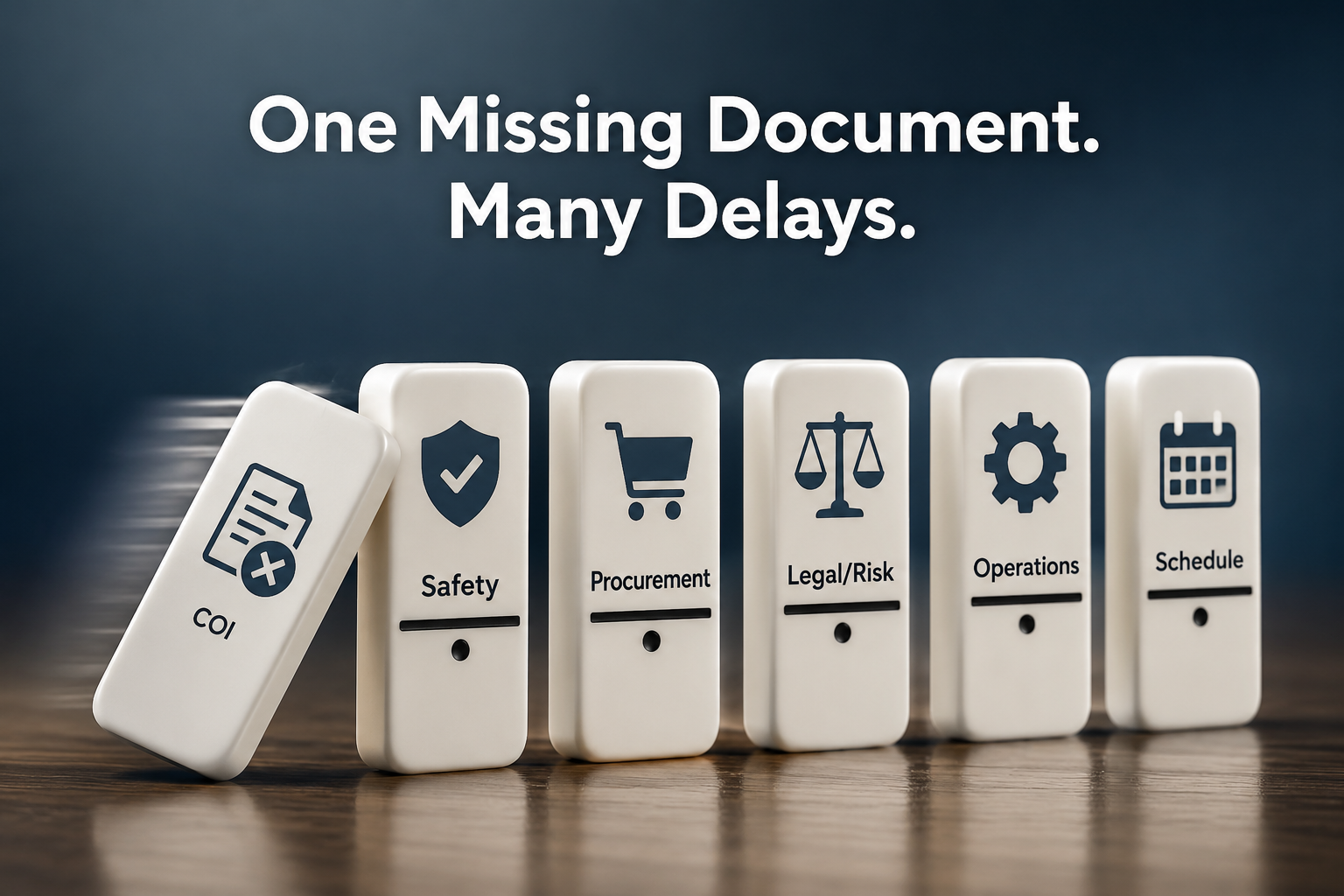
A missing certificate of insurance (COI), incomplete training record, outdated written program, or unclear inspection history may look like paperwork. But it affects decisions in the real world. Should the contractor be allowed onsite? Should work be delayed? Should the risk be escalated? Who has authority to approve an exception? What information supports the decision?
These are not administrative questions. They are management questions.
Good contractor oversight depends on having the right information early enough to use it.
What Remote Audits Are Actually Good At
A remote safety audit is most useful when it is treated as a structured review of documentation that supports safety program implementation.
That includes records related to training, demonstrated comprehension, inspections, investigations, discipline practices, enforcement records, and required written safety programs. A remote audit cannot tell you whether every employee will follow the procedure tomorrow morning. But it can tell you whether the contractor has documentation showing that the procedure exists, that people have been trained, and that the company has a process for checking and enforcing expectations. That is valuable.
In my experience, many safety problems begin with uncertainty. The hiring organization assumes the contractor has a process. The contractor assumes its records are sufficient. The site assumes prequalification answered the important questions. But when the documentation is reviewed closely, gaps appear.
Sometimes the training exists, but comprehension was never documented.
Sometimes inspections are performed, but records are inconsistent.
Sometimes a written program exists, but there is little evidence that it is being reinforced.
A remote audit helps bring those gaps into view before they become field problems.
FIRST, VERIFY’s remote safety audit service is designed around this documentation-based review. It evaluates documentation of safety training, demonstrated comprehension, ongoing incident investigation and discipline practices, required written safety programs, and supporting materials for inspections, investigations, and enforcement records. The audit program can also be customized to client needs and performed annually or on a rotating basis.
That kind of review is especially useful for organizations managing a large contractor base. It creates a consistent way to look at many contractors without pretending that every contractor requires the same level of onsite attention.
Where Onsite Audits Still Earn Their Place
There are limits to what documentation can show.
A contractor may have a lockout/tagout program, but an onsite visit may reveal whether employees understand and follow it during maintenance. A contractor may submit fall protection documentation, but the field will show how tie-off practices are being applied. A contractor may provide inspection forms, but the jobsite will reveal housekeeping, equipment condition, and supervision habits.
That is why onsite audits still matter.
They are especially important when the work involves high-risk activity, changing site conditions, complex coordination, or hazards that cannot be judged from records alone.
The tradeoff is that onsite audits are expensive to scale. They require travel, scheduling, field access, and qualified personnel. If every contractor receives the same level of onsite review, the process may become too costly or too slow. If onsite audits are used only after problems occur, they become reactive.
The better approach is to use onsite audits where observation adds the most value.
That requires judgment.
A contractor with incomplete remote audit documentation may deserve follow-up. A contractor performing high-risk work may need direct observation regardless of paperwork quality. A new contractor working at a sensitive location may warrant additional review. A contractor with repeated documentation issues may require closer attention.
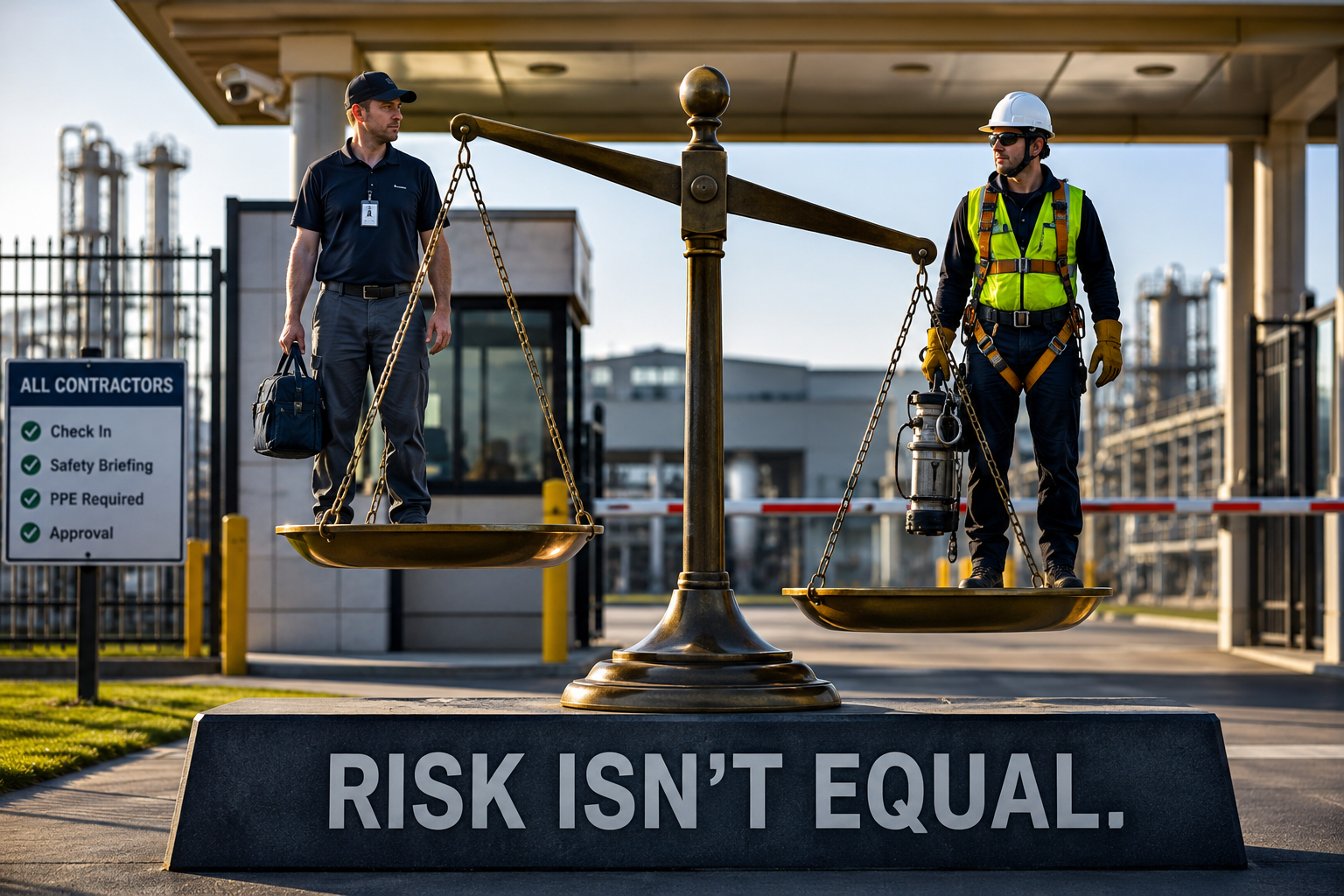
The point is not to audit more for the sake of auditing more. The point is to match the method to the risk.
The Real Issue Is Information Flow
Most contractor oversight problems are not caused by a lack of effort. They are caused by fragmented information.
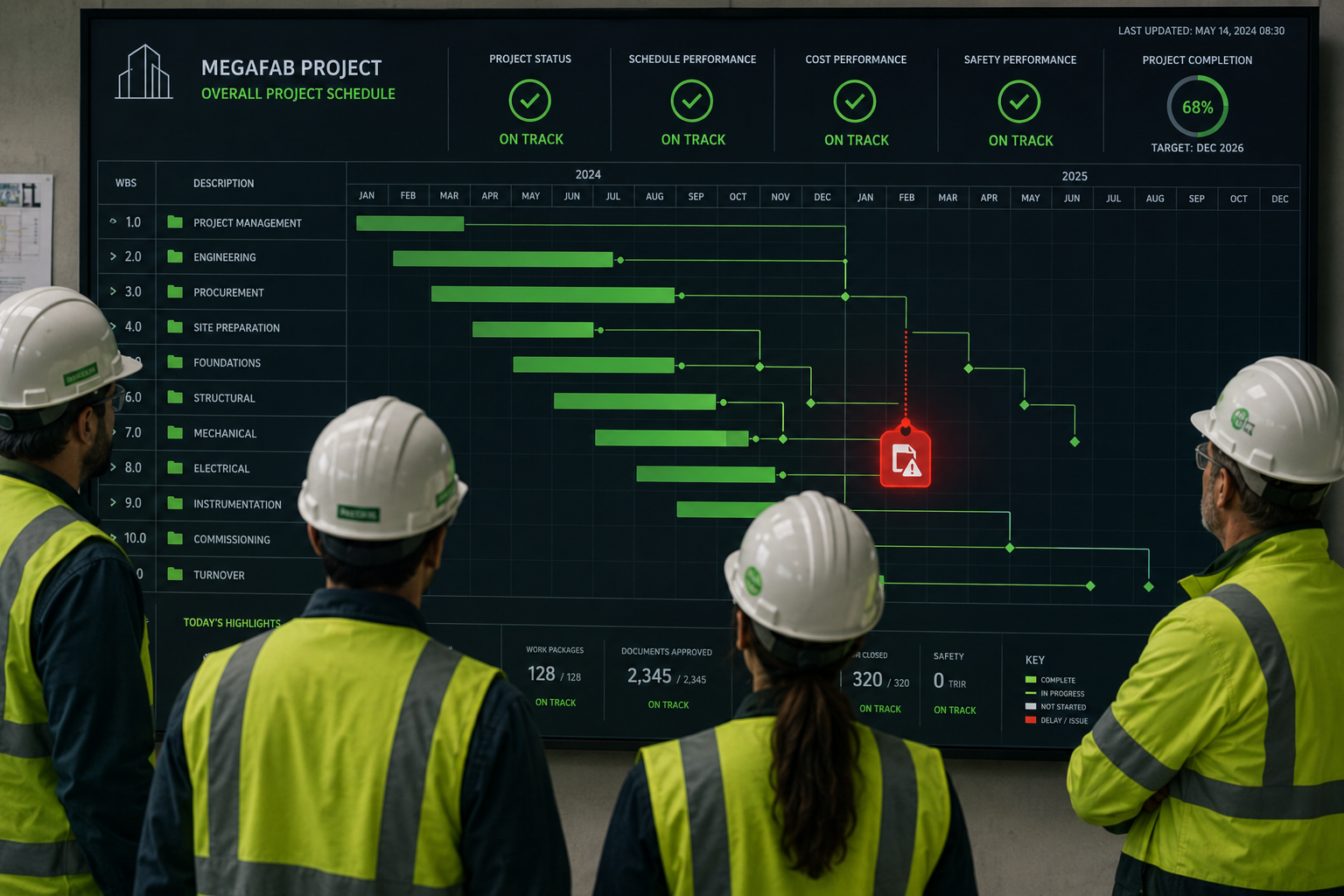
Safety may have one set of records. Procurement may have another. Risk may be tracking COIs separately. Operations may be working from a schedule that does not reflect compliance status. When information is scattered, people fill in the blanks with assumptions.
That is where consistency breaks down.
A strong hybrid model depends on centralized contractor information. Contractor prequalification, COI management, safety documentation, orientation records, and audit results should not live in disconnected places. When they do, the organization loses time and visibility.
FIRST, VERIFY supports this part of the process through structured contractor prequalification, centralized safety and compliance data, COI management, online safety orientation, and remote safety audits. Its prequalification process uses client-defined requirements and consistent templates, while annual renewal helps keep contractor information current.
The practical benefit is not just convenience. It is better decision-making.
When EHS, Risk, Procurement, and Operations can see the same contractor information, they can make decisions from the same facts. That reduces confusion and helps organizations apply standards more consistently across locations and departments.
A Practical Hybrid Model
A useful hybrid oversight model usually follows a simple sequence.
First, define what information is required before work begins. That should include the contractor’s business information, safety documentation, COIs, licenses, certifications, and any supporting records tied to the work being performed.
Second, centralize the information so the right teams can see contractor status without searching through emails and spreadsheets.
Third, use remote safety audits to review documentation that supports safety program implementation. This is where training, comprehension, inspections, investigations, discipline practices, and written safety programs can be evaluated in a consistent way.
Fourth, use onsite audits selectively. Field observation should be reserved for higher-risk work, unresolved documentation concerns, new or unfamiliar contractors, repeated gaps, or situations where direct observation is necessary to understand the risk.
Finally, build renewal into the process. Contractor information changes. Insurance expires. Training needs to be refreshed. Work scopes evolve. A model that works once but does not stay current will eventually weaken.
The goal is not to create a heavier process. It is to create a clearer one.
The Lesson for EHS, Risk, Procurement, and Operations Leaders
The most effective contractor oversight programs do not treat audits as isolated events. They treat audits as part of a larger information system.
Remote audits provide scale and consistency. Onsite audits provide observation and depth. Prequalification establishes the baseline. COI management reduces insurance-related uncertainty. Online safety orientation helps document site-specific readiness. Centralized data helps everyone work from the same source of information.
None of these elements removes the need for judgment. In fact, a good system should improve judgment by giving leaders better information earlier.
That is the practical value of a hybrid model.
It does not assume every contractor presents the same risk. It does not rely only on self-reported claims. It does not send auditors into the field when a documentation review would be sufficient. It also does not assume that documents can replace field observation when the work demands a closer look.
A balanced model recognizes the tradeoff.
Remote audits help you see whether the contractor’s safety process is documented. Onsite audits help you see whether that process is alive in the field.
The organizations that manage this well tend to ask better questions before work begins.
- What do we know?
- What can we verify?
- What still needs to be observed?
And perhaps most important: are we using our audit resources where they actually reduce uncertainty, or are we simply following a process because it is the process we inherited?
You might also like