Risk-Based Contractor Requirements: Why Every Contractor Shouldn’t Follow the Same Checklist
A maintenance manager once described a familiar problem to me in a way that stuck.
He had two contractors waiting for approval. One was coming in to repair an office door. The other was scheduled for work inside an active production area, near equipment that required lockout/tagout procedures.
Both had been sent the same contractor checklist.
The door repair company was frustrated by questions that had little to do with its work. The higher-risk contractor had completed the same form, but the internal team still did not feel confident that the documentation matched the exposure of the job.
On paper, the process looked consistent.
In practice, it was not very useful.
That is the problem with treating every contractor the same. A uniform checklist can create the appearance of control while missing the more important question: what risk does this contractor’s work actually create?
The Checklist Is Not the Control
In many organizations, the contractor checklist becomes the center of the process. People ask whether the form was completed, whether the certificate of insurance was uploaded, whether the contractor is “approved,” and whether the project can move forward.
Those are necessary questions.
But they are not the first questions.
The first question should be about the work itself. Will the contractor enter an operating area? Work at height? Service machinery? Use chemicals? Perform electrical work? Bring employees onsite during a shutdown? Interact with site traffic or production equipment?
The answers should determine the requirements.
A contractor performing limited, low-risk work may need a basic review of business information, insurance documentation, and client-defined requirements. A contractor performing higher-risk work may need a more detailed review of safety documentation, OSHA-related history, training records, licenses, certifications, COIs, and other supporting records.
The discipline is not in making every contractor complete the same checklist. The discipline is in making sure every contractor completes the right checklist.
That distinction sounds small. Operationally, it is significant.
Why This Matters Beyond Administration
When contractor requirements are poorly matched to the work, the consequences show up in several places.
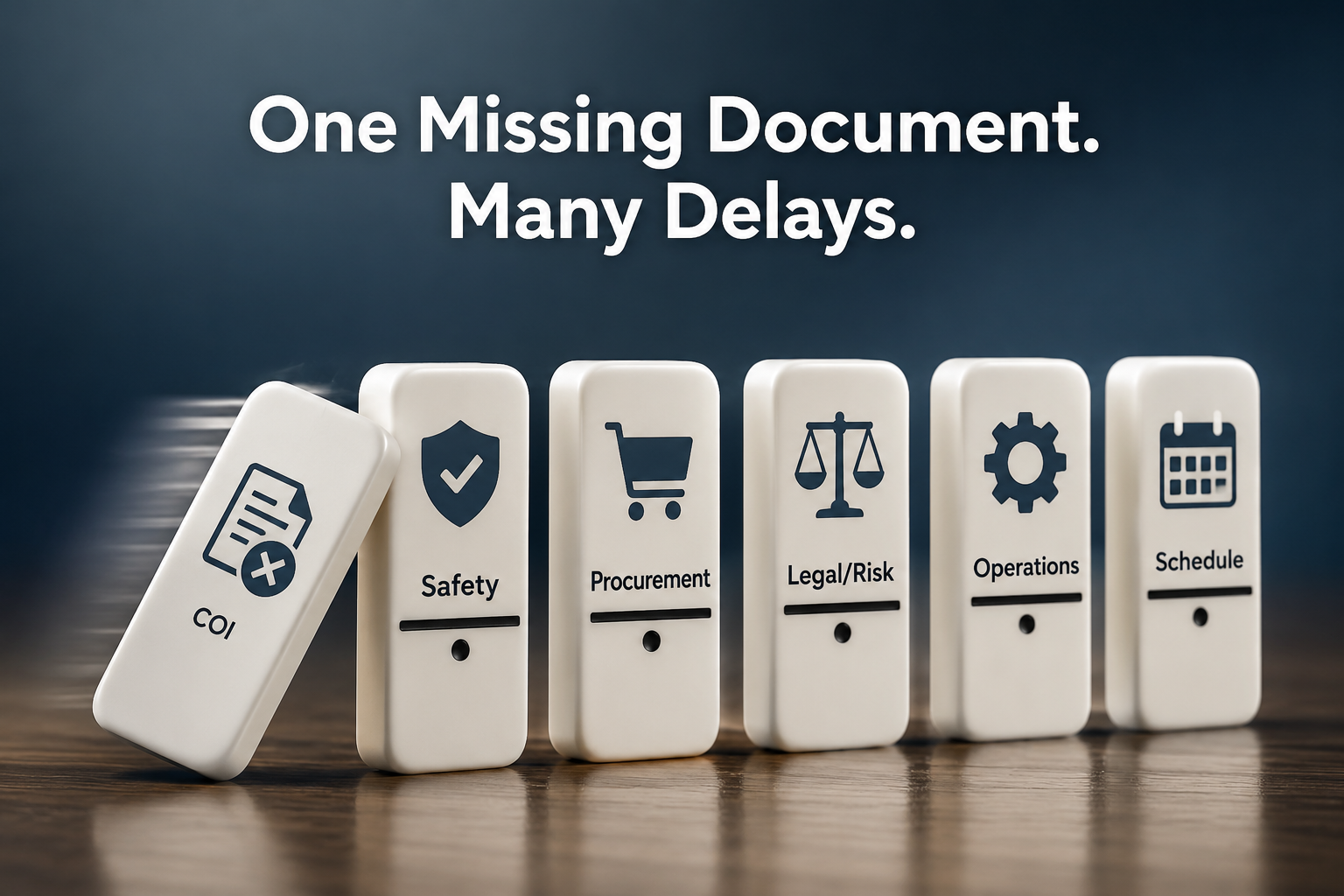
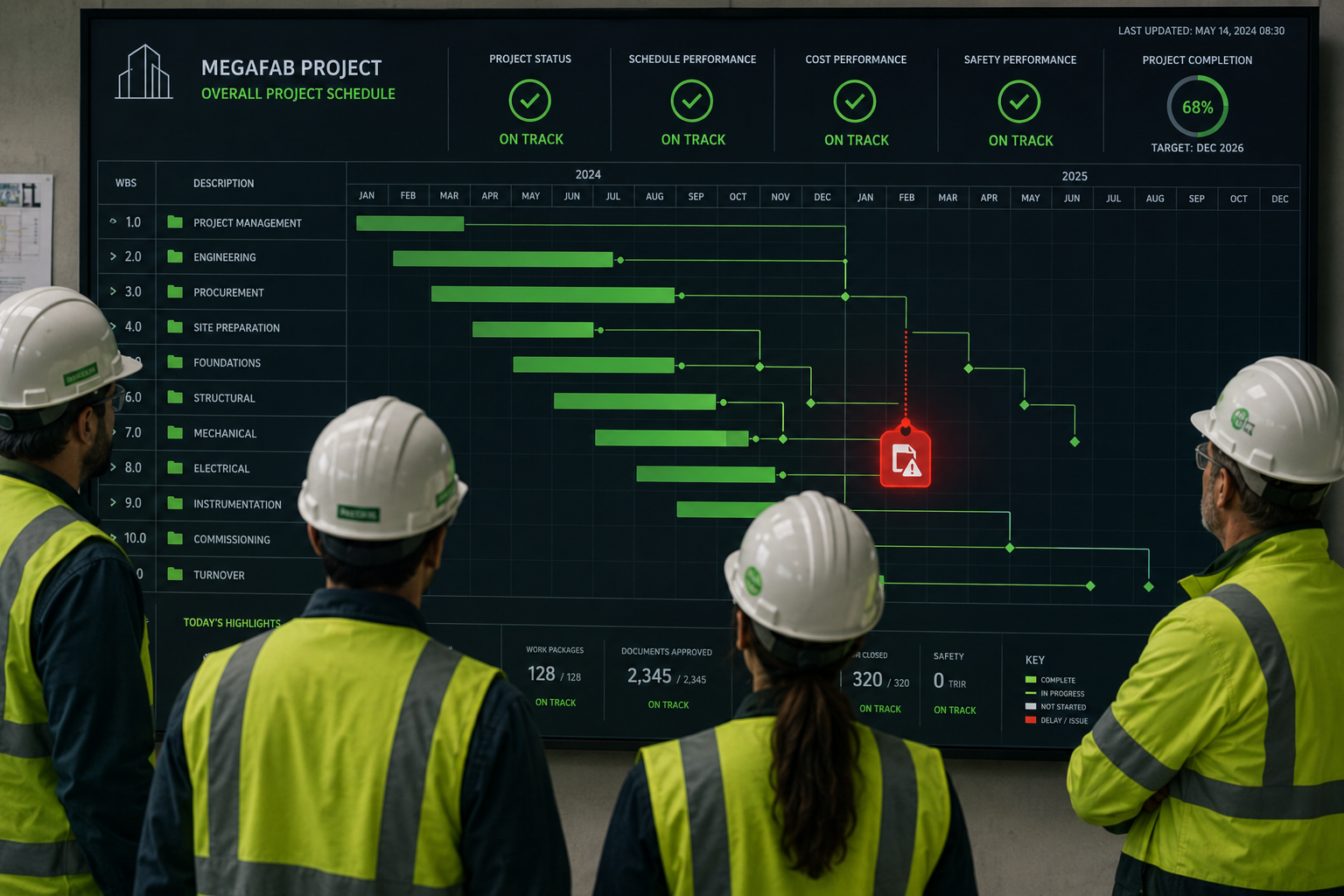
EHS teams spend time chasing documentation that may not be relevant to the actual scope. Procurement teams get pulled into last-minute follow-up. Operations leaders face delays when a contractor is scheduled but still missing a document. Risk teams may discover too late that the insurance review did not match the exposure of the job.
The process starts to feel like paperwork rather than risk management.
That is when people begin to work around it.
A supervisor may say, “They have worked here before.” A project manager may push for an exception because the job is urgent. A contractor may submit whatever is requested without understanding why it matters. Over time, the system becomes less credible because the requirements do not feel connected to real conditions in the field.
This is where risk-based contractor requirements become useful. They bring the process back to common sense.
Higher-risk work deserves a higher level of review. Lower-risk work deserves an appropriate review that does not create unnecessary friction.
The Risk Is in the Work, Not the Paper
U.S. safety data continues to show why this distinction matters. The Bureau of Labor Statistics reported 5,070 fatal work injuries in the United States in 2024. Construction remained one of the highest-risk private industries, with more than 1,000 fatal injuries that year. (Bureau of Labor Statistics)
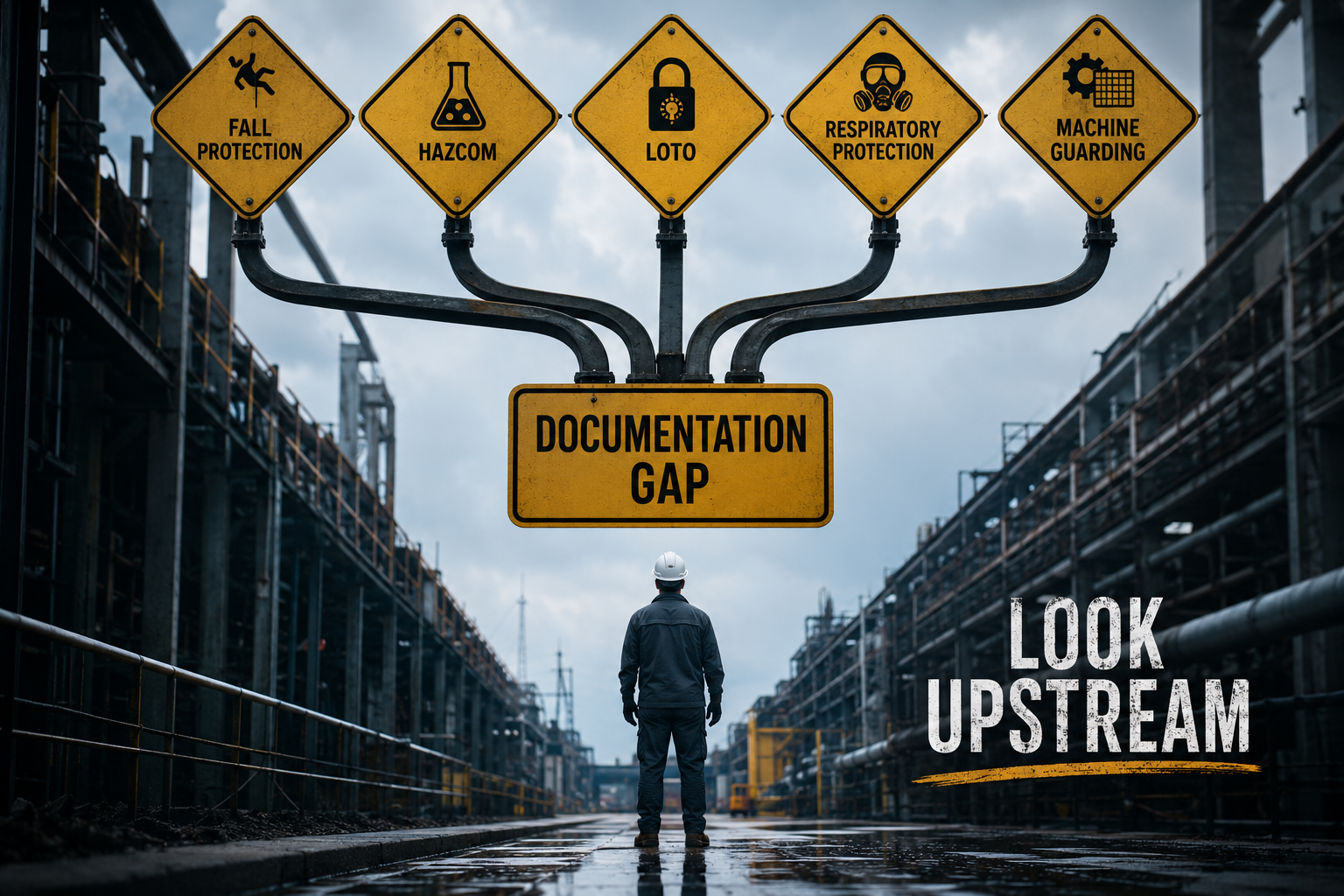
OSHA’s most frequently cited standards also point to the kinds of hazards that often appear in contractor work: fall protection, hazard communication, ladders, lockout/tagout, respiratory protection, powered industrial trucks, PPE, and machine guarding. OSHA says it publishes this list so employers can identify and correct recognized hazards before inspections occur. (OSHA)
These are not theoretical categories. They are the everyday exposures that show up when contractors enter active worksites, production areas, utility environments, maintenance operations, and construction projects.
So the question becomes practical: if one contractor is working around hazardous energy and another is doing a limited low-risk task, why would the same documentation process be enough for both?
The Hidden Weakness in Manual Processes
Risk-based requirements are difficult to manage when contractor information is scattered.
One department may have the COI. Another may have the safety questionnaire. A site leader may know the contractor’s work history. Procurement may have the agreement. EHS may have training records. Finance may have business information. No one person sees the full picture without asking three other people.
That is not a people problem. It is a system design problem.
When information lives in separate places, the organization relies on memory and follow-up. That creates inconsistency. One location may apply a detailed review. Another may use a lighter process. A third may approve based on familiarity.
The organization may believe it has a contractor management program, but what it really has is a collection of local habits.
A risk-based process requires better information flow. The right requirement must be assigned at the beginning. The right documents must be collected. The right people must be able to see the contractor’s status. Renewal dates must be visible. Insurance gaps must be identified before they delay work.
Without that visibility, even a well-intentioned process becomes fragile.
Three Questions Worth Asking
Before adding another document to a contractor checklist, leaders should pause and ask:
Are we requesting this because the work requires it, or because it has always been on the form?
Would we ask for more information if this contractor were performing higher-risk work tomorrow?
If there were an incident, audit, or insurance review, could we explain why this contractor was approved for this scope?
Those questions tend to reveal whether the process is risk-based or simply administrative.
Consistency Does Not Mean Identical Treatment
One of the objections to risk-based requirements is that they may create inconsistency.
That concern is understandable. Many organizations have spent years trying to reduce variation across locations and departments. A single checklist feels like a way to standardize the process.
But identical treatment is not the same as consistent treatment.
A consistent process applies the same logic every time. It does not ask every contractor for the same information regardless of scope. It defines categories of work, assigns requirements based on those categories, and applies those requirements in a repeatable way.
A low-risk contractor follows the low-risk path. A contractor performing higher-risk work follows a more detailed safety path. If the scope changes, the requirements can change with it.
That is a more mature form of consistency.
It respects the reality that contractor work varies while still giving the organization a structured process to follow.
Where Templates Help
This is where client-defined templates can be useful.
FIRST, VERIFY supports contractor prequalification through a structured, rules-based process that collects contractor business information, safety documentation, and required supporting records. Its confirmed services list notes that the system uses client-defined requirements to determine qualification status and applies consistent templates, including safety and low-risk templates, so contractors provide the correct details.
The important point is not the template itself. It is the management principle behind it.
Templates help convert informal judgment into a defined process. Instead of relying on each location to decide what to ask for, the organization can determine in advance what low-risk work requires and what higher-risk work requires.
That improves clarity for internal teams and contractors.
It also helps reduce overcollection. If a contractor is performing limited low-risk work, the process can reflect that. If a contractor is performing work with greater safety, insurance, or compliance exposure, the process can require more.
COIs Are a Good Example
Insurance is one of the easiest places to see the problem.
A COI may be collected and marked complete, but that does not necessarily mean the coverage meets the client’s requirements for the work being performed. Limits, policy types, endorsements, expiration dates, and supporting documents can all matter.
For low-risk work, the review may be straightforward. For higher-risk work, the insurance review may need to be more detailed.
FIRST, VERIFY’s confirmed services list describes COI management as collecting COIs and required supporting documents, verifying insurance details against client specifications, providing reminders for expiring policies, and displaying insurance compliance within each contractor’s profile.
That kind of visibility matters because COI problems often become operational problems. A missing or expired document does not stay in the risk department. It becomes a delayed start, an exception request, or a difficult decision at the worst possible time.
Training and Orientation Follow the Same Logic
Site-specific orientation should also be tied to the work and the environment.
A contractor who will enter a controlled operating area may need different preparation than someone performing a limited task outside normal operations. If the site has specific hazards, policies, traffic patterns, emergency procedures, or access rules, contractor employees need to understand them before they arrive.
FIRST, VERIFY supports online safety orientation by hosting site-specific orientation content, supporting quizzes or policy acknowledgments, providing completion certificates, reporting by contractor, employee, course, and date, and sending renewal reminders.
Again, the principle is simple: the requirement should follow the exposure.
The Practical Takeaway
Risk-based contractor requirements are not about making contractor management more complicated. They are about making it more honest.
A one-size-fits-all checklist can look clean in a procedure manual, but contractor work does not happen in a procedure manual. It happens in plants, job sites, maintenance areas, warehouses, utilities, and operating facilities where risk changes with the task.
The better approach is to define the work, assign the requirement, centralize the information, and keep it current.
That approach does not eliminate judgment. It improves the conditions under which judgment is made.
For EHS, Risk, Procurement, and Operations leaders, the useful question is not, “Did every contractor complete the same checklist?”
The better question is: “Did this contractor provide the right information for the work we are asking them to perform?”
That is where contractor prequalification starts to become more than administration.
It becomes part of how the organization manages risk.
You might also like