Why Complex Systems Fail: Lessons from Aviation, Nuclear Power, and Healthcare
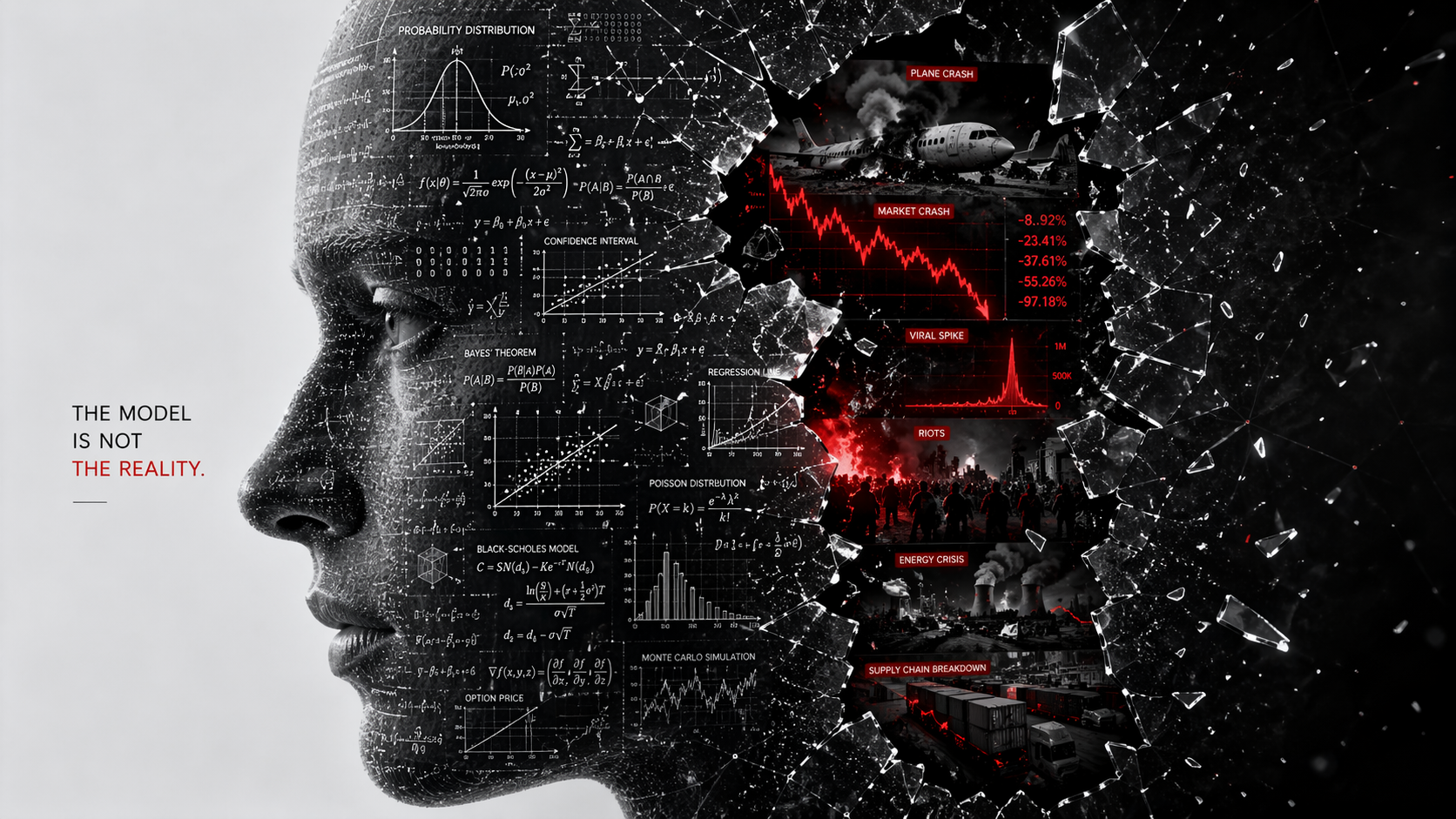
A commercial airplane rarely crashes because of one mistake.
Investigations usually uncover a chain of smaller failures that built over time: a missed maintenance item, incomplete communication during a shift change, outdated documentation, or a procedure that was assumed but never verified.
The same pattern appears in healthcare. A medication error may involve inaccurate records, rushed handoffs, or missing safeguards that seemed minor until they aligned at the worst possible moment.
High-risk industries have spent decades studying these failures because the consequences are enormous. Aviation, nuclear power, and healthcare learned that catastrophic incidents are rarely caused by a single dramatic event. They happen when systems become fragmented, inconsistent, or difficult to manage under pressure.
That lesson has become increasingly important for organizations managing contractors across construction, manufacturing, utilities, and energy operations in the United States.
Because contractor risk rarely starts in the field.
It usually starts long before work begins with inconsistent prequalification, outdated safety documentation, expired certificates of insurance (COIs), or disconnected compliance processes spread across spreadsheets, emails, and multiple departments.
For EHS leaders, procurement teams, and operations executives, the challenge is no longer simply collecting contractor information.
The challenge is building systems resilient enough to keep critical details from slipping through the cracks.
What High-Risk Industries Learned About Failure
One of the most influential concepts in modern safety management is the Swiss Cheese Model, developed by psychologist James Reason. The model explains that organizations build multiple layers of defense to prevent incidents: training, procedures, inspections, audits, and oversight - but every layer contains weaknesses. Problems occur when those weaknesses align.
That thinking transformed industries like aviation and nuclear energy.
Instead of focusing only on worker mistakes, organizations began studying how systems contribute to failure. The goal shifted from reacting to incidents toward strengthening the processes that prevent incidents from escalating in the first place.
The aviation industry is one of the clearest examples. According to the Federal Aviation Administration (FAA), aviation safety improved dramatically over the last several decades because of standardized procedures, rigorous documentation practices, recurring training requirements, and structured verification systems.
Healthcare adopted a similar approach. Following the Institute of Medicine’s landmark report To Err Is Human, hospitals across the U.S. increased their focus on process controls, communication systems, and documentation accuracy to reduce preventable harm.
The same principles apply to contractor management in high-hazard industries.
When contractor oversight depends heavily on manual tracking or inconsistent processes, operational risk increases even when everyone involved is trying to do the right thing.
The Hidden Weakness in Many Contractor Management Programs
Most organizations already have contractor requirements in place.
The problem is maintaining consistency as operations grow more complex.
A contractor may appear compliant during onboarding. But six months later, has the insurance coverage expired? Was updated safety documentation submitted? Has required orientation training been renewed? Are all facilities applying the same standards?
These are the types of operational gaps that quietly create risk exposure over time.
According to OSHA, fall protection, lockout/tagout (LOTO), machine guarding, and hazard communication continue to rank among the agency’s most frequently cited violations in the United States. In many cases, organizations are managing contractors performing precisely these high-risk activities.
Now consider this question:
How confident is your organization that contractor qualifications, training records, and COIs are consistently verified across every facility and project?
For many EHS and operations leaders, that’s where the real challenge begins.
Why Administrative Complexity Becomes a Safety Problem
Contractor management is often viewed as an administrative process.
In reality, it directly affects operational resilience.
When documentation is fragmented across email chains, spreadsheets, shared drives, and paper files, teams lose visibility. Safety leaders spend valuable time chasing renewals, tracking missing records, and manually verifying information instead of focusing on higher-value risk management activities.
That administrative strain grows quickly in organizations managing multiple sites or hundreds of contractors.
Research from the National Safety Council has consistently shown that strong safety outcomes are tied not only to worker behavior, but also to organizational systems, communication, and process discipline.
That’s why industries with mature safety cultures prioritize standardization.
Not because standardization eliminates human error. But because it reduces unnecessary variability.
What Construction, Manufacturing, and Utilities Can Learn
Construction, manufacturing, utilities, and energy operations face a unique challenge compared to industries like aviation.
Their contractor workforce is constantly changing.
Different companies arrive onsite with different safety programs, insurance structures, training records, and operational practices. Managing that complexity manually becomes increasingly difficult as organizations expand across locations and business units.
This is where centralized contractor management systems play an important role.
According to FIRST, VERIFY materials, the platform uses a structured, rules-based process to collect contractor business information, safety documentation, supporting records, and insurance information based on client-defined requirements. The system also supports annual renewal requirements to help organizations maintain current information over time.
That consistency matters more than many organizations realize.
A missed insurance renewal may delay a project.
Incomplete documentation may create audit issues.
An unverified contractor submission may expose the organization to unnecessary operational or legal risk.
Individually, these seem like administrative problems.
Collectively, they become system weaknesses.
The Difference Between Collecting Information and Verifying It
One of the most important lessons from aviation and healthcare is that documentation alone is not enough.
The process surrounding the documentation matters just as much.
That distinction is particularly important in contractor prequalification.
Many organizations still rely heavily on self-reported contractor information without standardized verification processes. But under pressure tight deadlines, staffing shortages, production demands even small inconsistencies can create larger downstream problems.
Consider another important question:
If an OSHA inspection or serious incident occurred tomorrow, how quickly could your team retrieve accurate contractor documentation across every active location?
That question often reveals whether a system is organized for compliance or simply managing paperwork reactively.
FIRST, VERIFY addresses this challenge through centralized contractor profiles, customizable templates, COI tracking, and structured review workflows designed to improve consistency across contractor onboarding and renewal processes.
The platform also provides online safety orientation capabilities, including completion tracking, reporting, quizzes, and automated renewal reminders.
For organizations managing large contractor populations, these operational efficiencies can significantly reduce administrative burden.
Why Resilience Matters More Than Perfection
No safety system eliminates risk entirely.
Even aviation and healthcare - two of the most regulated industries in the world - continue to study failures because complexity always introduces uncertainty.
The goal is not perfection.
The goal is resilience.
Resilient organizations build processes capable of functioning consistently even under pressure. They reduce dependency on memory, manual tracking, and disconnected systems.
That approach becomes especially important as contractor oversight requirements continue to expand across U.S. industries.
Insurance verification requirements are becoming more detailed.
Documentation expectations continue to increase.
Audit readiness matters more than ever.
At the same time, many EHS and procurement teams are being asked to manage growing contractor networks without adding internal resources.
That reality is forcing organizations to rethink how contractor compliance information is collected, organized, and maintained.
Building Stronger Contractor Management Systems
Organizations that strengthen contractor oversight typically focus on three core priorities:
First, they standardize contractor prequalification requirements across locations and departments.
Second, they centralize safety documentation, licenses, certifications, and COI tracking to improve visibility and consistency.
Third, they create repeatable renewal and verification processes so critical information stays current over time instead of being reviewed only during onboarding.
These may sound like operational improvements. But in practice, they are system defenses.
And strong system defenses are what prevent small gaps from turning into larger operational failures.
Conclusion: Strong Systems Create Safer Operations
Aviation, nuclear power, and healthcare did not improve safety by simply telling workers to “be more careful.”
They improved safety by building systems designed to reduce uncertainty, strengthen verification, and support better decisions under pressure.
Construction, manufacturing, utilities, and energy organizations face the same challenge today.
Contractor management has become too complex for fragmented processes and manual oversight alone.
When contractor information is centralized, organized, and consistently maintained, organizations gain stronger visibility into who is performing work, whether requirements are current, and where operational risks may exist.
That visibility supports safer decisions, stronger compliance efforts, and more efficient operations.
FIRST, VERIFY helps organizations streamline contractor prequalification, manage COIs, centralize compliance documentation, and improve onboarding consistency through a structured, rules-based approach designed for high-hazard industries.
Because in complex systems, resilience is rarely built through one major change.
It’s built by consistently closing the small gaps before they align.
You might also like