The New Reality of Workplace Fatalities: Why Verified Contractor Information Matters More Than Ever
THE NUMBER never gets easier to read.
Thousands of workers in the United States still lose their lives on the job each year despite decades of OSHA regulations, safety programs, and corporate commitments to “zero incidents.”
For Safety Directors, Risk & Compliance leaders, and Operations executives, this reality lands hard. Because when a serious incident occurs, the questions that follow are never abstract:
- Was this contractor properly qualified?
- Were their safety requirements verified or just assumed?
- Did we truly understand the risk we were bringing onsite?
This article examines long-term workplace fatality trends and explains why contractor prequalification, supported by verified documentation and consistent processes, remains one of the most critical and controllable levers organizations have to reduce risk in high-hazard work environments.
Workplace Fatalities Haven’t Disappeared - They’ve Plateaued
OSHA workplace safety regulations have unquestionably improved conditions over the past several decades. Fatality rates dropped significantly after OSHA’s establishment, and many organizations now have mature internal safety programs.
Yet progress has stalled.
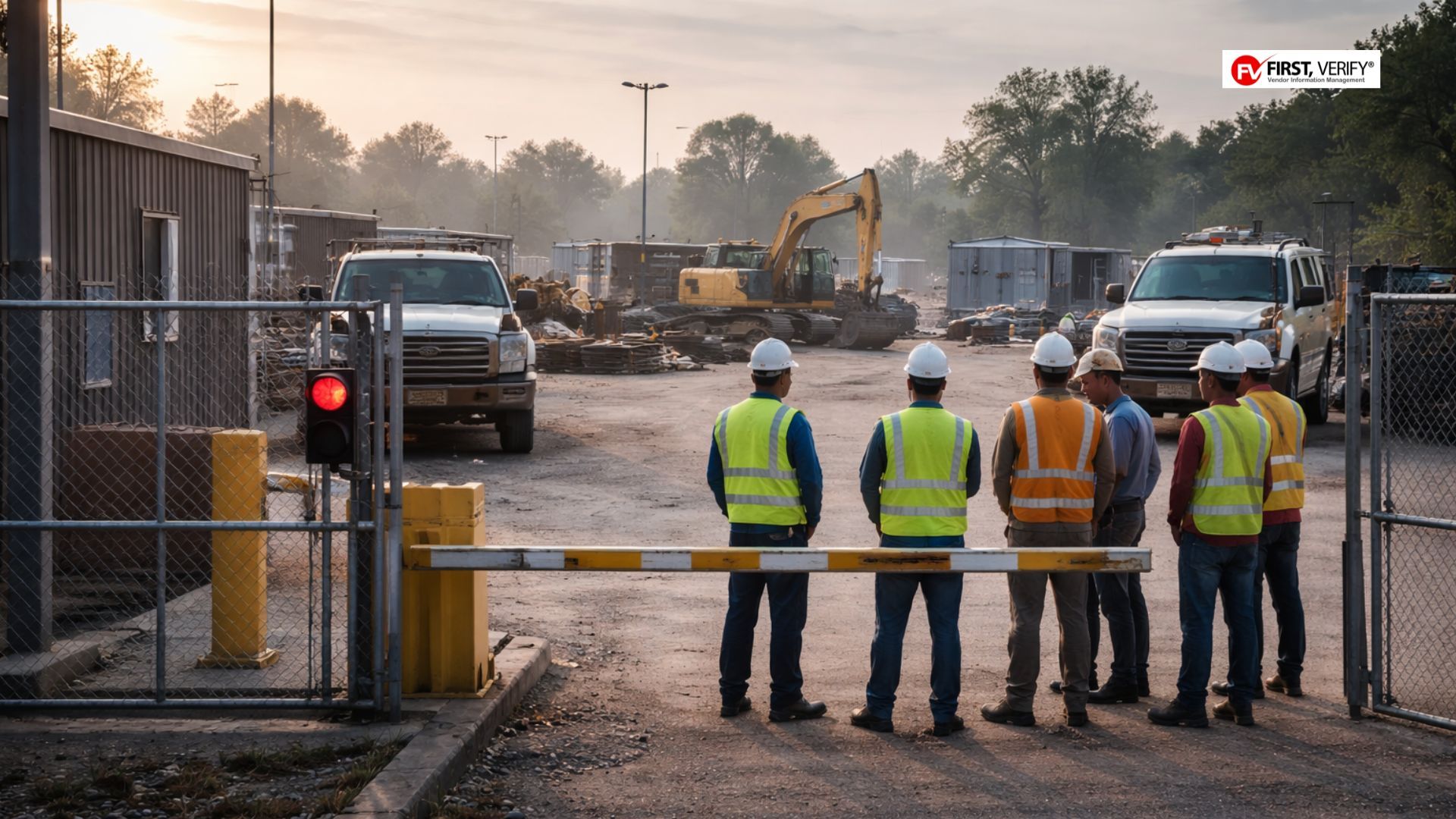
In industries that rely heavily on contractors - construction, manufacturing, utilities, energy, and industrial services - hazardous work continues to account for a disproportionate share of serious injuries and fatalities. These environments involve:
- Energized equipment
- Confined spaces
- Elevated work
- Mobile equipment and traffic interaction
- Specialized tasks performed by short-term or rotating contractor crews
The common thread is not a lack of rules. It’s a lack of consistent, verified contractor information before work begins.
The Hidden Risk: Inconsistent Contractor Prequalification
Most organizations agree that contractor prequalification is important. The challenge is how it’s executed.
Where Programs Break Down
Many contractor compliance programs still rely on:
- Manual tracking of safety documentation
- Spreadsheets or email-based COI collection
- Inconsistent requirements across departments or sites
- Self-reported information without structured review
These gaps create blind spots, especially when contractor volumes increase or work spans multiple locations.
Without a structured system, it becomes difficult to confirm that:
- Safety documentation requirements are met consistently
- Certificates of insurance (COIs) align with contractual standards
- OSHA history and EMR data have been reviewed
- Required training documentation is current and complete
Over time, these weaknesses compound, increasing exposure to both safety incidents and compliance failures.
Why Verified Contractor Information Matters More Than Ever
When incidents occur, investigations don’t stop at the jobsite. They examine the process.
Regulators, insurers, and legal teams all ask the same questions:
- Were contractor safety compliance requirements clearly defined?
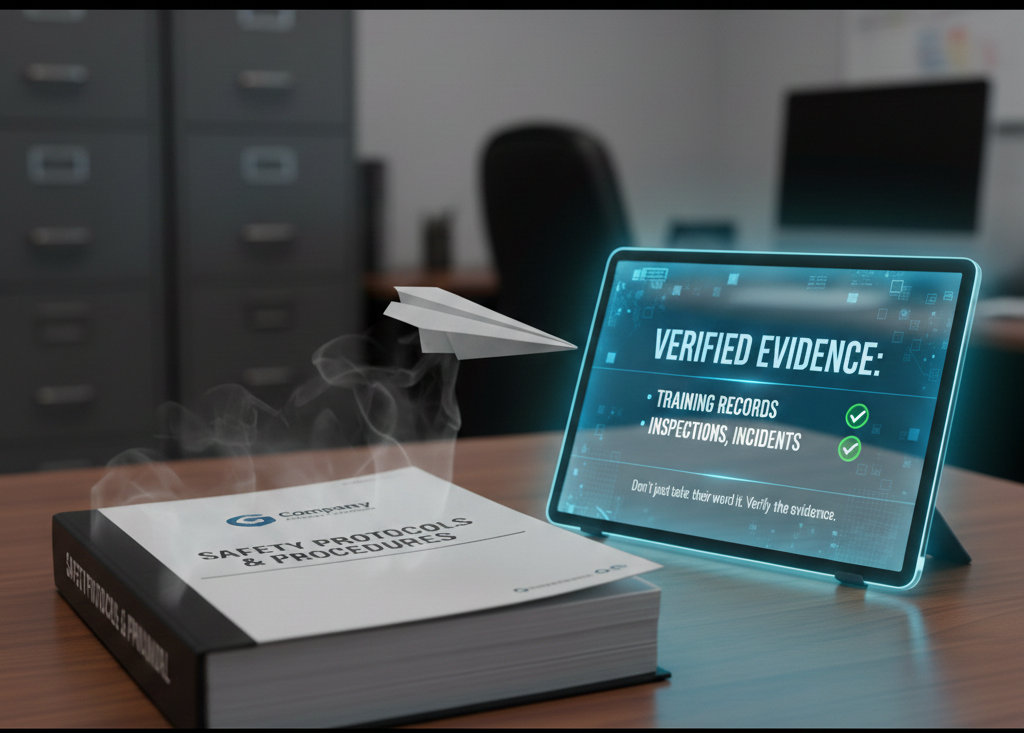
- Was documentation collected, reviewed, and maintained?
- Could the organization demonstrate due diligence in contractor risk management?
Verified contractor information is what allows organizations to answer “yes” with confidence.
This is where rules-based contractor compliance verification becomes essential - not as a bureaucratic exercise, but as a foundational safety control.
Contractor Prequalification as a Risk Control, Not a Checkbox
Effective contractor compliance management starts long before a contractor arrives onsite.
A structured contractor prequalification process should:
Define requirements based on risk
- Higher-risk contractor work requires deeper safety documentation.
- Lower-risk scopes can follow streamlined requirements without compromising standards.
Collect consistent safety documentation
- Three most recent years’ OSHA 300A & 300 forms
- NCCI Worksheets showing the Interstate Experience Modification Rating (EMR) for the last three year rating periods
- Citation details (as applicable)
- Required written safety programs (as applicable)
Verify certificates of insurance (COIs)
- Confirm coverage types and limits meet contractual requirements.
- Track expirations to avoid last-minute delays or exposure.
Apply uniform review standard
- Use consistent templates so contractors are evaluated against the same criteria every time.
- Eliminate subjective or ad-hoc decision-making.
Require annual renewal
- Contractor risk profiles change.
- Prequalification should remain current - not static.
This approach transforms contractor prequalification from a one-time hurdle into an ongoing safety documentation requirement.
How FIRST, VERIFY Supports Contractor Safety Compliance
FIRST, VERIFY was built around one core principle: accurate, centralized contractor information enables better safety and compliance decisions.
The platform provides a rules-based contractor prequalification process that helps organizations:
- Apply consistent prequalification templates based on risk level
- Collect and organize contractor safety documentation in one system
- Track certificates of insurance (COIs) against client-defined requirements
- Maintain current information through required annual renewals
Rather than relying on scattered files or informal reviews, teams gain a clear, documented view of contractor compliance status before work begins.
This structured approach helps reduce administrative burden while supporting more defensible contractor risk management practices.
Practical Checklist: Strengthening Your Contractor Prequalifica-tion Process
For organizations reassessing their approach, start here:
- Are contractor safety documentation requirements clearly defined by risk level?
- Is contractor information centralized, or spread across systems and inboxes?
- Are COIs reviewed consistently or only when issues arise?
- Can your team quickly confirm a contractor’s compliance status if asked today?
- Do contractors renew and revalidate information annually?
If any of these questions are difficult to answer, the risk is not theoretical - it’s operational.
The Stakes Are Human and Organizational
Every workplace fatality represents a life lost, a family changed forever, and an organization forced to confront whether more could have been done.
While no system can eliminate risk entirely, structured contractor prequalification and documentation verification remain among the most effective ways to reduce preventable exposure, especially in high-risk contractor work environments.
The new reality of workplace safety demands more than good intentions. It demands consistency, verification, and accountability.
Take the Next Step Toward Verified Contractor Information
If your organization is evaluating how to strengthen contractor safety compliance, now is the time to assess whether your current process delivers the visibility and consistency today’s risk environment requires.
FIRST, VERIFY helps Safety, Risk, and Operations leaders implement structured contractor prequalification supported by accurate, centralized compliance data.
Learn more at www.firstverify.com or request a
demonstration.
You might also like